Amazon SEO Is More Than Adding Keywords
A common misconception is that Amazon SEO simply means placing more keywords into a product listing.
In reality, effective marketplace optimization requires a balance between relevance, discoverability, and conversion.
A listing can rank for a keyword but still generate weak sales if the content does not convince shoppers to buy.
That is why a professional approach considers both search visibility and the quality of the shopping experience.
What Is One-Time Amazon SEO Optimization?
One-time optimization is a focused project where an existing Amazon listing is reviewed and improved during a defined period.
This approach is sometimes described as a one time fix because the seller wants to address specific SEO weaknesses without committing to recurring management.
A typical project may include:
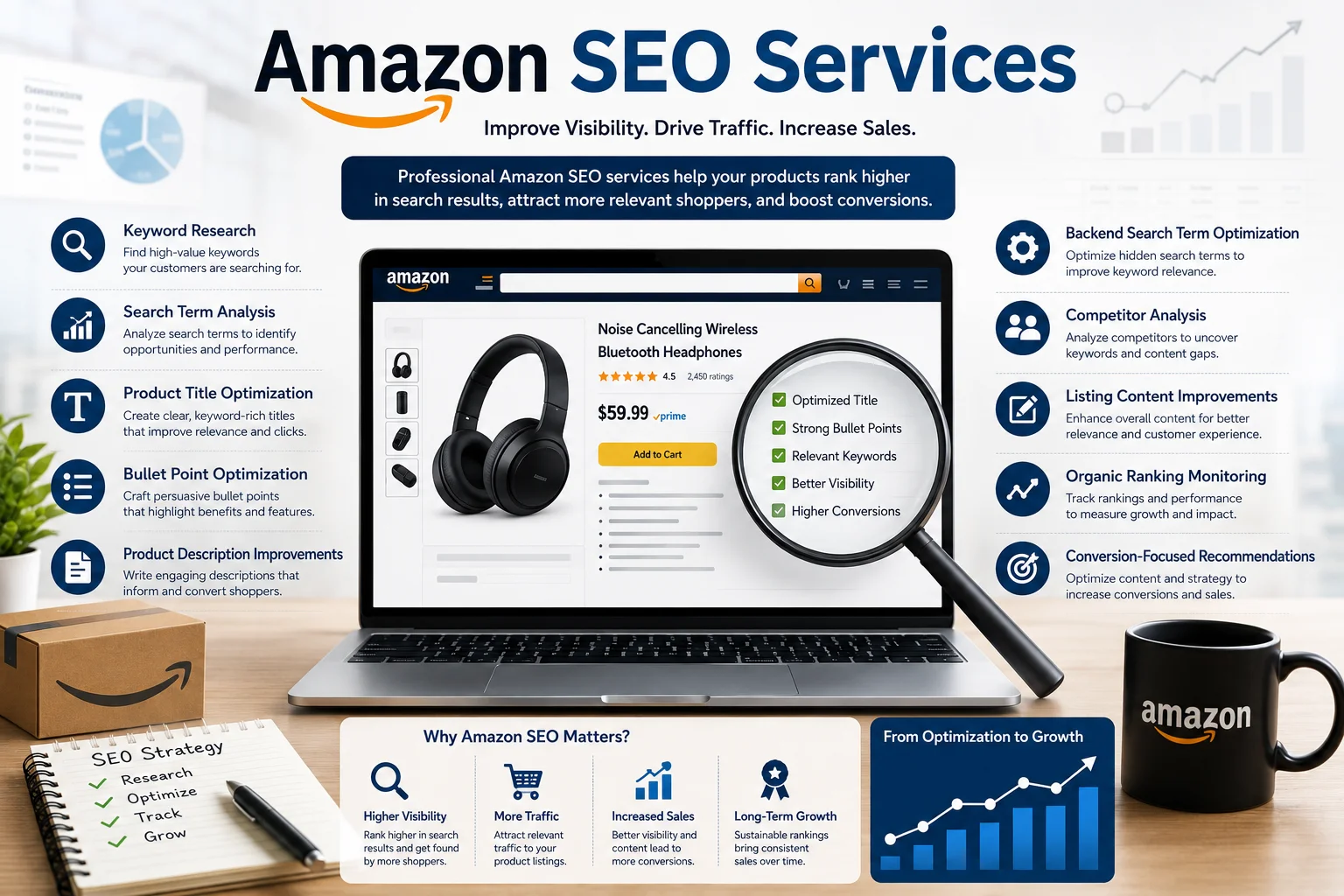
- Initial keyword research
- Listing SEO review
- Competitor research
- Content optimization
- Backend keyword recommendations
- Search term analysis
- Basic performance recommendations
Once the agreed work is completed, the project ends.
When a One-Time Fix Makes Sense
A first time fix can be appropriate when:
- A listing has never been professionally optimized
- Product content is outdated
- Important keywords are missing
- Titles or bullets are poorly structured
- Backend search terms need improvement
- A new product needs an SEO foundation
- The seller has an internal team that can handle future monitoring
For a relatively stable product in a low-competition niche, a one-time optimization may provide a useful starting point.
The Limitation of One-Time Optimization
The biggest limitation is simple: Amazon does not stop changing after your listing is optimized.
Your competitors can launch new products, improve their listings, gain reviews, change pricing, and target the same search terms.
Search behavior can also change.
As a result, an optimized listing today may need additional work later.
A one-time project can solve today’s problems, but it does not automatically manage tomorrow’s opportunities.
What Are Ongoing Amazon SEO Services?
Ongoing SEO services involve continuous monitoring, analysis, and optimization rather than a single listing update.
Instead of treating SEO as a one-time project, the seller has an ongoing process for identifying opportunities and responding to marketplace changes.
Depending on the service provider, ongoing SEO tasks may include:
- Keyword performance monitoring
- Search ranking tracking
- Competitor monitoring
- Listing updates
- Search term analysis
- Content testing
- New keyword discovery
- Organic visibility analysis
- Product-level SEO recommendations
- Seasonal optimization
- Catalog-wide SEO reviews
This model is particularly useful for brands competing in categories where organic visibility can change frequently.
Why Continuous SEO Matters
Amazon search visibility is influenced by more than the words used in a listing.
Customer behavior, product relevance, sales performance, competition, reviews, availability, and other marketplace signals can influence how products perform.
That means continuous SEO gives brands an opportunity to identify changes instead of waiting until rankings have already dropped significantly.
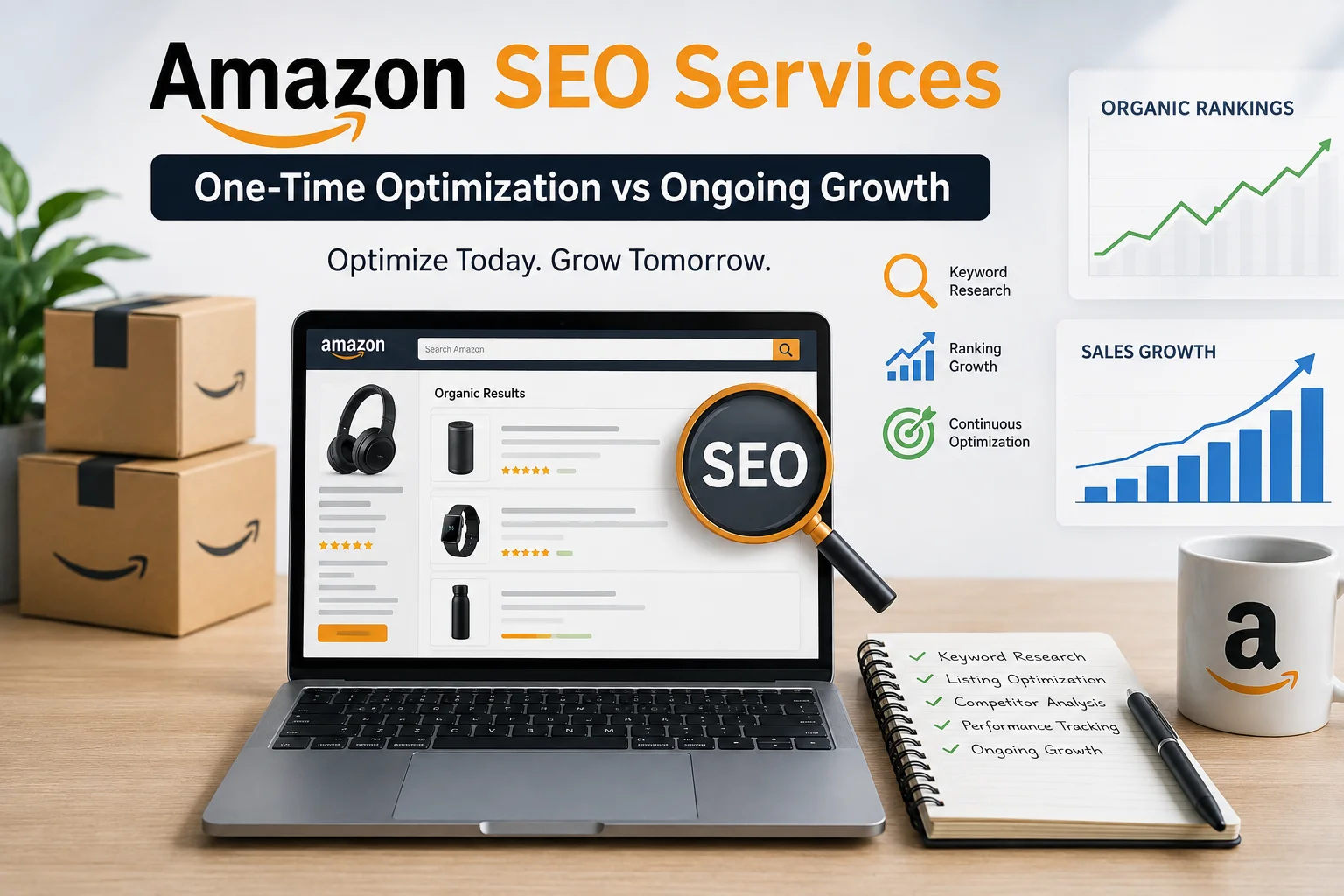
One-Time Optimization vs Ongoing SEO Management
The two approaches solve different business problems.
Factor | One-Time Optimization | Ongoing SEO Management |
Keyword research | Initial research | Continuous research |
Listing optimization | Usually one project | Updated as needed |
Competitor monitoring | Limited | Regular |
Ranking tracking | May be included initially | Continuous |
New keyword opportunities | Limited | Regularly identified |
Seasonal changes | Usually not ongoing | Can be incorporated |
Long-term strategy | Limited | Stronger |
Best for | Specific SEO problems | Competitive growth |
Management | Project-based | Recurring |
Neither option is automatically right for every seller.
The decision depends on what you want Amazon SEO to accomplish.
When Should a Brand Choose One-Time Optimization?
A one-time project can be the right choice when your primary goal is to establish a stronger SEO foundation.
For example, imagine a brand that recently launched a product. Its listing has weak titles, poorly structured bullets, limited keyword coverage, and an incomplete backend search term strategy.
A professional optimization project could address these problems together.
Best Situations for One-Time SEO
Consider one-time optimization if:
Your listing has never been optimized: A professional review can establish a stronger foundation.
You recently redesigned your listing: SEO can be incorporated into the new content.
You have a small catalog: Managing optimization internally may be realistic after the initial project.
You have low competition: Ranking changes may be less aggressive than in highly competitive categories.
You need an SEO audit first: An audit can identify weaknesses before you decide whether recurring management is necessary.
When Should a Brand Choose Ongoing SEO?
Ongoing optimization becomes more valuable when organic visibility is an important part of your long-term sales strategy.
Competitive categories rarely remain static.
A product may rank well today and lose positions later as competitors improve their listings or new products enter the market.
Signs Your Brand Needs Ongoing SEO
You may benefit from ongoing monthly SEO services if:
- Your products operate in highly competitive categories
- You manage multiple ASINs
- Organic rankings are strategically important
- Your competitors frequently update their listings
- Your product catalog changes regularly
- You launch products throughout the year
- Your internal team does not monitor rankings consistently
- You want a long-term organic growth strategy
Why Large Catalogs Often Need Continuous Management
Managing SEO across one product is very different from managing dozens or hundreds of products.
With a larger catalog, keyword opportunities, competitors, rankings, and content issues can become difficult to track manually.
An ongoing process allows brands to prioritize the products that need attention instead of treating every listing exactly the same way.
What Does Ongoing Amazon SEO Management Include?
Good ongoing SEO management should not mean making random changes every month.
The work should follow a structured process based on performance data and marketplace changes.
Regular Keyword Research
Search behaviour can change over time.
An ongoing strategy can identify new relevant search terms, emerging customer language, and opportunities competitors may not be targeting effectively.
The objective is not to continuously add keywords.
It is to discover better opportunities and determine whether existing content still matches shopper intent.
Organic Ranking Monitoring
Ranking monitoring helps identify whether important keywords are gaining or losing visibility.
Instead of checking rankings only when sales decline, sellers can establish a baseline and monitor changes over time.
This creates a clearer picture of whether optimization efforts are producing meaningful organic progress.
Competitor Monitoring
Competitors do not stand still.
They may change:
- Product titles
- Bullet points
- Images
- A+ Content
- Pricing
- Product positioning
- Keyword targeting
- Promotions
Regular competitor analysis can reveal changes that deserve a strategic response.
Listing Optimization
A strong Amazon listing SEO service can continuously improve product content when there is a clear reason to do so.
This may involve refining titles, bullets, descriptions, backend terms, or other content elements based on newly identified opportunities.
The goal should always be meaningful improvement rather than constant editing.
Amazon SEO Audit vs Ongoing Management
An Amazon SEO audit and ongoing management are not the same service.
An audit is primarily diagnostic.
It answers questions such as:
- Where is the listing currently weak?
- Are important keywords missing?
- How does the listing compare with competitors?
- Are there content issues?
- What optimization opportunities exist?
Ongoing management goes further by monitoring what happens after those recommendations are implemented.
Think of an Audit as a Starting Point
For brands unsure whether they need recurring support, an audit can be a practical first step.
It can reveal whether the main problems are technical, content-related, competitive, or strategic.
After the audit, the brand can decide whether it needs a first time fix or a longer-term optimization program.
Can One-Time Optimization Deliver Long-Term Results?
Yes, but the results depend heavily on the market and the condition of the listing.
A strong initial optimization can improve the relevance and structure of a listing.
However, maintaining strong organic visibility is a different challenge.
Why Results Can Change After Optimization
Several factors can affect future performance:
- New competitors
- Changes in shopper behavior
- New keyword opportunities
- Product availability
- Sales performance
- Review changes
- Category competition
- Seasonal demand
- Changes in marketplace conditions
This is why brands should avoid viewing SEO as something that is “finished” permanently.
How to Choose the Right Amazon SEO Service Model
Choosing between a project and recurring service should start with your business situation rather than the service price.
Choose One-Time Optimization If…
A one-time project may be suitable if you need to:
- Fix major listing weaknesses
- Establish a keyword foundation
- Improve an under-optimized product
- Prepare a new listing
- Receive professional recommendations
- Build an internal SEO process
Choose Ongoing Management If…
Recurring optimization may be more appropriate if you want to:
- Grow organic visibility over time
- Monitor important keyword positions
- Track competitor changes
- Continuously identify keyword opportunities
- Manage SEO across multiple products
- Adapt listings to changing market conditions
How eComManagers Supports Long-Term Amazon SEO Growth
For brands that want more than a one-time content update, eComManagers can provide strategic Amazon SEO support designed around long-term marketplace growth.
Our approach can combine research, optimization, monitoring, and ongoing recommendations rather than treating every listing as a standalone project.
A Practical Approach to Amazon SEO
The process can begin with understanding the current state of your listings.
From there, the strategy can focus on:
- Identifying important keyword opportunities
- Reviewing existing listing content
- Comparing competitors
- Prioritizing optimization opportunities
- Monitoring organic performance
- Refining the strategy as the market changes
This approach helps brands make SEO decisions based on evidence rather than assumptions.
Why Professional Support Can Be Valuable
An Amazon SEO professional can save internal teams time by handling research and optimization work while the brand focuses on product development, operations, and overall growth.
For brands competing in demanding categories, professional support can also provide a more consistent optimization process.