
An Agency Reporting Strategy in Amazon PPC

An Agency Reporting Strategy in Amazon PPC

Why Reporting Matters in Amazon PPC In Amazon PPC (Pay-Per-Click) advertising, reporting isn’t just about numbers—it’s what connects strategy and outcome. An effective reporting strategy helps agencies and customers stay on the same page, track performance in real time, and make informed decisions for expansion. Leading agencies recognize that transparent, transparent reporting fosters trust. It makes sure the clients are aware of where their money is being spent, how the campaign is doing, and what they are doing better. Rather than confusing spreadsheets and ambiguous figures, agencies now prefer clarity, a visual dashboard, and automated reports. How Agencies Usually Deal with Reporting A professional Amazon PPC agency doesn’t merely place ads—it tells the tale of what the data is saying. Here’s how agencies often organize their reporting strategy: Tailored Dashboards Today’s agencies leverage the power of advanced analytics tools and Amazon Advertising’s API to build real-time dashboards. These dashboards are customized to every client’s KPIs—whether ACOS, ROAS, CTR, or overall sales. Clients may log in at any time and view real-time campaign performance. This does away with the waiting game and instills confidence. Clean Metrics & KPIs Rather than bombarding clients with tens of figures, agencies concentrate on specific performance measures immediately connected to business objectives: Impressions & Clicks to know visibility CTR & Conversion Rate to track engagement ACOS & ROAS to judge profitability Total Ad Sales & Organic Lift to demonstrate overall impact Reporting Cadence A robust reporting system is not simply a matter of what gets reported but when it gets reported. Most agencies keep: Weekly performance snapshots to monitor short-term trends Monthly deep-dive reports to evaluate campaign health Quarterly reviews for strategic scaling     Actionable Insights Effective reporting doesn’t just display data—it interprets it. Agencies point out what’s working, what isn’t, and what comes next. This makes clients not merely informed but empowered to make more informed business decisions. Why Reporting Transparency Matters For Amazon sellers with a PPC investment, transparency is not optional. An effective reporting strategy: Gains the trust of the agency-client relationship Offers transparency around ad spend and ROI Facilitates rapid decision-making and scaling Avoids guesswork and holds people accountable Clients don’t want to be left in the dark—they want to be able to see precisely how their budget is doing. How the eCom Manager Does It At eCom Manager, transparency is central to our PPC management. We have developed a reporting system that is not only reliable but also client-friendly and actionable. Real-Time Interactive Dashboard We deliver to each client a personal live dashboard that monitors: Campaign performance in real time ACOS, ROAS, impressions, conversions Keyword-level performance trends Our objective is to provide clients with the same level of visibility as we do, our internal metrics are not obscured behind sophisticated reports. Weekly & Monthly Reports Weekly reports collate wins, areas of improvement, and optimizations implemented immediately. Monthly reports provide strategic analysis with graphical insights, so clients can see the larger picture—whether they are experienced sellers or Amazon PPC newbies. Insight-Driven Calls We don’t merely send reports. We walk them through them in plain language with scheduled calls. Our team guides clients through each key number, why it’s significant, and what happens next. Personalization for Every Client Each company has varying objectives. Some desire aggressive scaling, while others desire steady ROAS. That’s why reports from us are tailor-made—not paste-and-go templates. You may sell kitchen utensils or electronics, but your report caters to your specific plan. Real-World Example: Turning Data Into Growth Recently, a California-based medium-sized seller of home decor items approached us frustrated with misleading reports from their former agency. They did not have any idea about what was effective and where they were spending their budget. In 2 weeks, we: Created a real-time dashboard Cleaned and rebuilt their campaigns Conducted weekly review calls to discuss progress The payoff? A 30% ROAS boost in a single month—because they finally had clarity to make better choices. Final Thoughts A solid reporting strategy isn’t simply a back-office function—it’s a strategic differentiator. When agencies deliver clear, actionable reporting, clients make better decisions, scale more intelligently, and develop long-term trust. At eCom Manager, we don’t simply report numbers—we make them understandable and actionable for our clients. Whether you’re just beginning or handling intricate campaigns, our reports make it so that you’re always the boss of your Amazon PPC venture.

Amazon DSP, Sponsored Brands, and Sponsored Products — A Full Advertising Strategy by eCom Manager

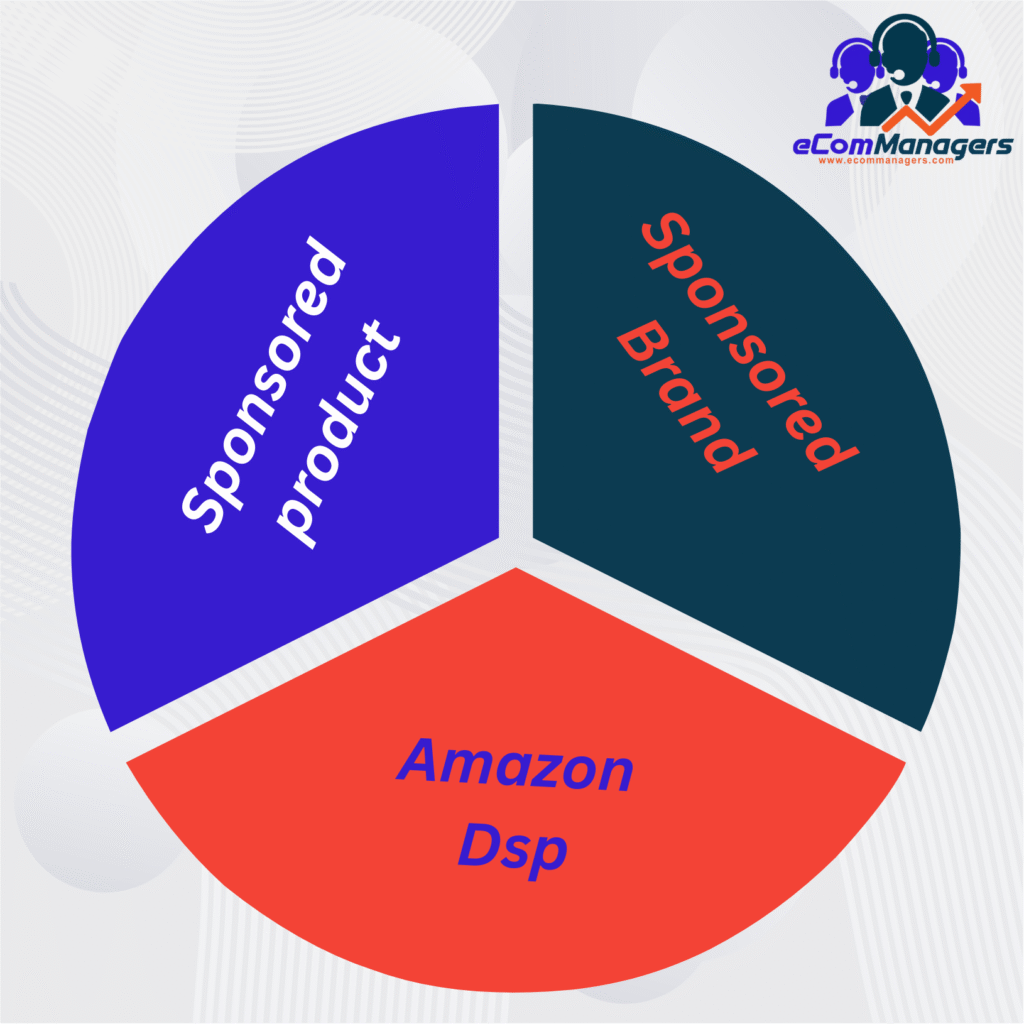
If you’re selling on Amazon, advertising isn’t just an option anymore — it’s the fuel that powers visibility and sales. But with so many ad types available — Amazon DSP, Sponsored Brands, and Sponsored Products — it’s easy to get confused about which one fits your business goals. Each serves a different purpose, and when used together strategically, they form a powerful system that drives consistent growth. At eCom Manager, our expertise is assisting brands in learning and leveraging these advertisement options in the proper order — generating awareness, driving conversions, and scaling sales sustainably. Let’s discuss what each of these ad categories is, when to utilize them, and how we integrate them to deliver high-performing campaigns for our customers. Learning the Three Fundamentals of Amazon Ads Sponsored Products Sponsored Products are Amazon’s most popular and performance-based ads. They’re CPC ads that directly promote individual listings within search results or on product pages. When a consumer searches for something like “organic coffee beans,” Sponsored Product ads show up exactly where they’re already browsing — so great for converting right away. They’re great for: Introducing new products Encouraging quick sales and visibility Defending your listings from competition Boosting organic ranking In brief, Sponsored Products are your best bet for bottom-of-funnel sales — snagging customers ready to purchase now. Sponsored Brands Sponsored Brands care less about one-product performance and more about brand awareness. They display your logo, a tailored headline, and some of your products — frequently at the top of results. They allow shoppers to connect to your brand rather than one product. Sponsored Brands perform best when: You have several variations or products You desire to grow repeat buyers You’re establishing a long-term brand identity They’re amazing for mid-funnel advertising — when you want to get customers starting to notice your brand, checking out your Storefront, and browsing your entire catalog.   Amazon DSP (Demand-Side Platform) While Sponsored Products and Sponsored Brands are search ads that have to appear on Amazon, Amazon DSP is a whole different ball game. It’s Amazon’s programmatic ad platform that allows brands to reach audiences both on and off the Amazon platform with display, video, and OTT (streaming) ads. Why DSP is so powerful is that it can leverage Amazon’s audience data to reach shoppers even when they are shopping on other websites or apps. You can retarget individuals who looked at your products but failed to buy, as well as access new audiences that have similar interests. Amazon DSP is most suitable for: Retargeting former visitors Creating brand awareness beyond Amazon Scaling up established brands to the next level It’s perfect for top-of-funnel and remarketing campaigns — reminding your brand in front of potential customers until they’re ready to make a purchase. When Should You Use Each One? Imagine your Amazon experience as a growth funnel. When you’re beginning, your priority is to make sales and visibility right away — that’s when Sponsored Products are your best friend. Once you have momentum with products and reviews, you move to Sponsored Brands to share your story, advertise your catalog, and establish customer trust. Once you have a consistent number of sales and are looking to grow your audience or re-target previous buyers, that’s where Amazon DSP comes in handy. It allows you to break out of Amazon search and reach high-intent shoppers everywhere online. In less jargon-speak: Begin with Sponsored Products to drive sales Use sponsored Brands to build familiarity Grow with Amazon DSP to scale and retarget This step-by-step process ensures your ad spend is utilized optimally, financing your growth at every phase. How eCom Manager Merges All Three for Maximum ROI Here at eCom Manager, we don’t merely place ads — we create systems from top to bottom that propel quantifiable business growth. Our approach centers on matching each ad type to your stage of brand, objectives, and customer behavior. Step 1: In-Depth Account Audit We begin by reviewing your product ad listings, search term reports, and ad history. This allows us to determine which ad forms will yield the largest return, as well as where gaps exist in your existing strategy. Step 2: Creating a Framework for Structured Advertising Then, we create a tiered campaign system: Sponsored Products generate immediate sales and keyword reach. Sponsored Brands increase brand recall and drive multiple SKUs. Amazon DSP targets non-converting audiences and increases brand reach. Each campaign reinforces the other, so your brand remains top-of-mind at every step of the buying process. Step 3: Constant Optimization We continue to optimize bids, re-keyword, experiment with ad creatives, and check placements. Based on real-time insights, our team ensures that your ACOS is optimized and your ROAS continues to improve. Step 4: Clear Reporting Our clients have weekly and monthly reports with the details of performance metrics — impressions, clicks, conversions, and spend. We make everything transparent so that you always know how your investment is faring. Real-World Success Story: Scaling a Home Décor Brand Our client, Luna Living, which is a Texas-based home decor brand, approached us with flat sales. They were using Sponsored Products alone, which was generating short-term outcomes but not long-term expansion. We took over and restructured their ad layout. We improved their Sponsored Product campaigns through enhanced keyword segmentation and added Sponsored Brand Video Ads to showcase their entire product line more compellingly. After achieving steady sales continuity, we created Amazon DSP campaigns to retarget consumers who had looked at their products but hadn’t bought — and reached the same audience shopping décor websites off Amazon. In only three months, their sales increased from $30,000 per month to $92,000, and their ACOS decreased by 23%. Most importantly, repeat buys drastically improved, which shows that brand awareness and retargeting had established actual consumer loyalty. Selecting the Appropriate Ad Type for Your Company If you don’t know where to start, follow this easy rule of thumb: Opt for Sponsored Products if you desire immediate visibility and conversions. Use Sponsored Brands if your goal is
Amazon PPC Agency FAQs: All You Want to Know Before You Hire One

Introduction It takes more than budgeting to run successful ads on Amazon — it takes strategy, monitoring, and continuous optimization. That’s why most sellers opt to collaborate with Amazon PPC agencies. An agency allows you to strategize, initiate, and expand campaigns for Sponsored Products, Sponsored Brands, Sponsored Display, and Video Ads, so that every click counts. Here are 20 of the most frequently asked questions sellers pose before engaging an Amazon PPC agency — explained simply and succinctly. Amazon PPC Agency FAQs What is an Amazon PPC agency? They run and optimize your ad campaigns to drive visibility, sales, and profitability through intelligent targeting and data analysis. Do I require Brand Registry? No. You can operate Sponsored Products without Brand Registry, but you’ll require it for Sponsored Brands and Video Ads. How long before I see results? You’ll generally experience results in 2–4 weeks, with steady progress after 60–90 days. Can you handle my current PPC campaigns? Yes. We can audit and enhance your active campaigns without sacrificing any historic performance data. Will I have control of my Amazon account? Yes. You remain the account owner, and the agency has only authorized, limited access. What is a minimum ad spend? We suggest starting at $1,000/month, although this depends on category and level of competition. How much do agencies charge? Typically, 8–15% of ad spend or a flat fee per month. Some agencies provide hybrid pricing models. Can you decrease my ACOS? Yes. Through optimizing bids, keywords, and targets, we lower ACOS gradually over time. What kinds of ads do you work with? All major ad formats — Sponsored Products, Sponsored Brands, Sponsored Display, and Video Ads.   Do you do automation or manual optimization? Hybrid model — automation for volume and manual optimization for accuracy. How frequently will I receive reports? You’ll receive weekly summaries, monthly reports, and live dashboard access for real-time insights. How long is the contract? We operate flexible month-to-month, with no long-term contracts. Do I need to suspend my existing ads? No. We optimize your running campaigns without stopping performance. How do you report progress? With email updates, dashboard reports, and planned strategy calls — however you like. Will you also make my listings better? Yes. We optimize listings, titles, and images to maximize conversions and ad performance. What PPC management tools do you utilize? We employ a combination of Amazon Advertising Console, Helium 10, Jungle Scout, and our own custom dashboards for monitoring and optimization. Do you also manage foreign marketplaces? Yes. We manage campaigns on Amazon US, UK, EU, and other international markets. How do you manage negative keywords? We actively review search term data and implement negative keywords to avoid wasted spend. May I scale with you on my campaigns? Yes. After we reach efficiency, we scale by growing targeting, placements, and budget strategically. What constitutes a good PPC agency? Transparency, communication, and measurable results — not endless promises. How eCom Manager Deals with It At eCom Manager, we know PPC success is born of clarity, consistency, and partnership. Our process is designed to make advertising easy, measurable, and profitable for each client. Smooth Onboarding We begin with a complimentary consultation to learn about your objectives, merchandise, and existing PPC configuration — to tailor a custom plan.   Clear Pricing Opt for a flat monthly rate or ad spend percentage. All plans involve reporting, account maintenance, and optimization. Complete Account Ownership Customers remain in command at all times. We remotely access your account securely via Amazon’s partner permissions. Real-Time Dashboard Access Each customer is provided with a unique performance dashboard for ACoS, ROAS, clicks, conversions, and best-performing keywords — refreshed in real-time. Weekly & Monthly Reports We give you comprehensive insights on campaign performance and next-step suggestions to keep you up to date. Ongoing Optimization Our team tracks campaigns on a daily basis, tweaking bids, optimizing keywords, and ramping up high-performing areas in order to maximize return. ACOS Reduction Strategy We integrate bid automation, keyword management, and intelligent placement targeting to continually lower your ACOS in the long run. Listing Optimization Assistance We assist in optimizing listings with keyword-based titles, descriptions, and A+ content to enhance ad conversion rates. Worldwide PPC Management Be it selling in the U.S., UK, Europe, or worldwide, our team optimizes every marketplace for local competition and trends. Personalized Communication You’ll get a dedicated PPC manager to regularly report to you, answer questions, and keep your campaigns in line with what your business needs. Final Thoughts Working with the right Amazon PPC agency comes down to having an agency that gets your brand, your customers, and your objectives. At eCom Manager, we simplify Amazon advertising and make it easy to scale. From onboarding to optimization, everything is transparent, data-driven, and geared for outcomes.   Because when it comes to Amazon PPC, success isn’t luck — it’s smart management and clear communication.
Amazon PPC Agency Onboarding: Step-by-Step Guide for New Clients

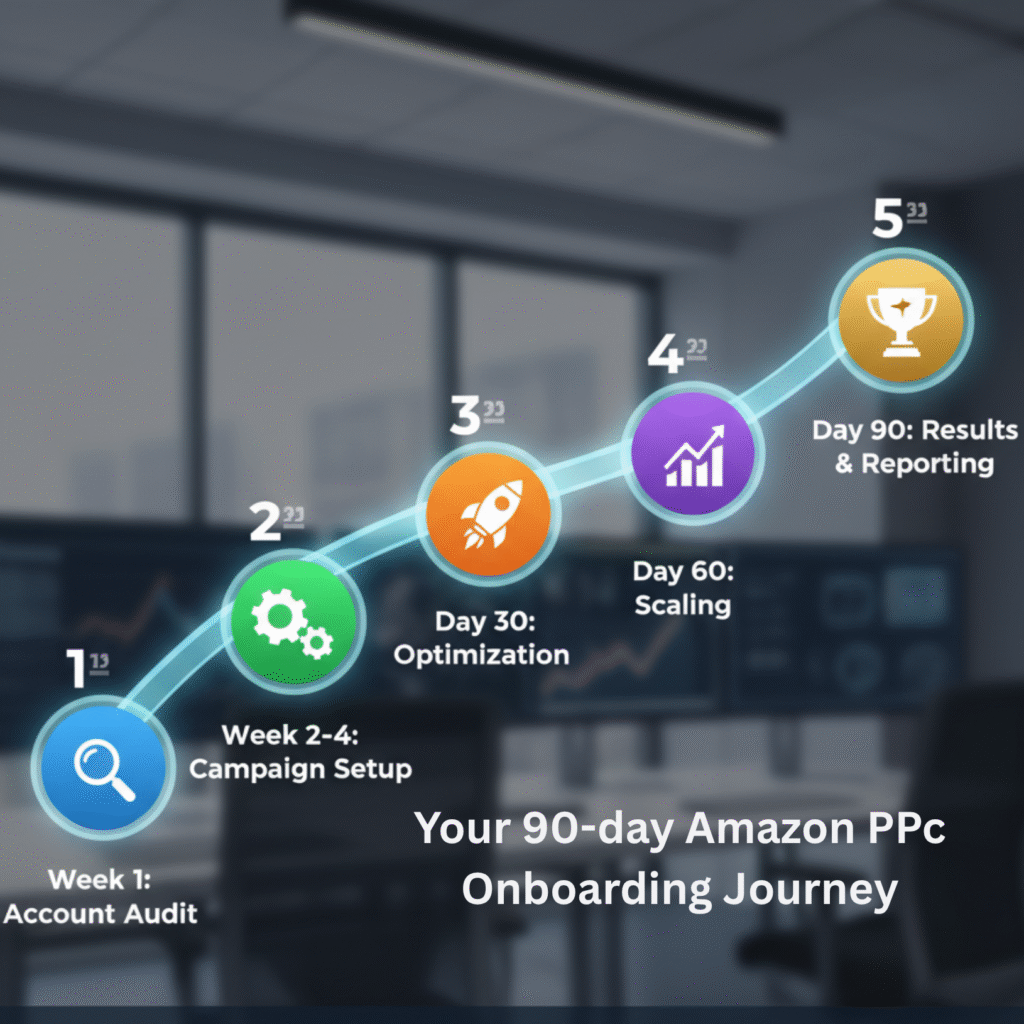
Learning Amazon PPC Onboarding When a company enters into a partnership with an Amazon PPC agency, the process starts way ahead of the launch of the first campaign. Onboarding is the cornerstone to success — having both the agency and the client on the same page regarding goals, data, communication, and performance expectations. A well-organized, clear onboarding process generates trust, transparency, and effectiveness. It prevents confusion down the line, makes certain all technical configurations are proper, and enables the agency to develop a PPC strategy tailored to the client’s unique business requirements. In simple words: Onboarding is where strategy meets structure. Why Onboarding Matters in Amazon PPC Onboarding may look like a mere administrative process for most vendors. However, in reality, it is one of the most significant aspects of an agency-client relationship. Onboarding, when executed properly, assists in: Establishing business objectives — perhaps revenue growth, new product launches, or reducing ACOS. Establishing campaign expectations — so that both parties are aware of what success would mean. Organizing account access — without delay or miscommunication. Set defined reporting and communication rhythm — keeping things transparent throughout the partnership. Develop a customized strategy — grounded in your data, niche, and product performance. Onboarding dictates how quickly your campaigns can go from configuration to measurable outcomes. How Agencies Usually Do Onboarding Professional Amazon PPC agencies have an orderly process when onboarding new clients. It’s not merely account linking — it’s more about getting to know the business from the inside out. Here’s how a typical agency onboarding process works: Step 1: Discovery Call and Goal Setting It begins with an extensive discovery call. Agencies pose important questions regarding: Your product offerings and target market PPC performance and current issues Monthly ad spend and margin profit Short- and long-term objectives This step assists in aligning the PPC strategy with your real business goals. For example, a brand that is introducing a new series of supplements will require a growth-hacking awareness-led strategy, whereas a brand that is already established can concentrate on profit maximization. Step 2: Account Audit and Access Setup After goals are established, agencies perform a thorough account audit. They check your campaigns, keyword performance, targeting setup, budgets, and structure. Meanwhile, the agency also asks for needed access rights like: Amazon Advertising Console access Seller Central or Vendor Central roles Brand Registry confirmation This makes it possible for the agency to receive accurate performance measurements and make proper adjustments in advance. Step 3: Competitor and Market Analysis Agencies conduct a competitor deep dive prior to running new ads. This involves looking at leading competing ads, analyzing their keywords, prices, and ad placement. This informs: Which search terms to target Where your product can make a difference What type of creative or copy strategy will ring through Step 4: Campaign Strategy and Structure Planning Following research, agencies develop a bespoke PPC strategy. This typically consists of: Campaign structure (Sponsored Products, Brands, and Videos) Keyword segmentation (branded, generic, and competitor keywords) Bidding and budget planning Negative keyword planning Projected KPIs (ACOS, CTR, ROAS targets) At this point, the client and agency go over and approve the strategy prior to launch — aligning all parties. Step 5: Campaign Setup and Testing The agency then creates campaigns with named conventions, ad groups, and targeting logic. They also create Sponsored Brand creatives, headlines, and video ads (if necessary). After launch, campaigns experience a learning period — typically 7–14 days — where early performance data is utilized to identify early tweaks. Step 6: Reporting & Communication Setup Transparency is essential to a long-term relationship. Agencies will typically state how and when reporting will occur. These are:   Weekly summary reports Monthly detailed reports with insights A shared dashboard for real-time metrics Regular strategy calls for feedback and next steps This step helps clients always know where their money is spent and how their campaigns are doing. Step 7: Optimization and Scale Plan Once the initial weeks have passed, agencies begin optimizing bids, keywords, and ad placements. The aim is to optimize performance, eliminate wasted spend, and gradually enhance ACOS and ROAS. As volume increases, agencies proceed to scale tactics — raising budget on top-performing products and broadening keyword coverage for optimal growth. How eCom Manager Manages It Onboarding with us at eCom Manager is a seamless, transparent process that’s specifically customized to each client’s objectives. We don’t jump into campaigns — we lay the groundwork for future success from day one. Here’s how we onboard new Amazon PPC clients step by step: Step 1: Kickoff & Brand Discovery We start with a kickoff session where we discover everything about your company — your brand vision, product USPs, competitors, and what success for you means. We also look at your historical ad performance and identify areas of underperformance. Step 2: Data & Account Setup We take care of all the technical aspects of onboarding — from Amazon Advertising Console setup to data syncing. Our experts enable secure access setup without giving away control to the client. Step 3: In-Depth Account Audit We conduct a 48-hour audit with the following coverage: Current keyword performance Ad group organization Budget distribution Bid effectiveness Use of negative keywords From which we create a brief “Quick Win Report” indicating what can be fixed right away. Step 4: Strategy Customization No two brands are identical. We develop a tailored strategy that outlines:   Types of campaigns and budget allocation Keyword targeting strategy Bidding and ACOS targets Creative direction (for Sponsored Brand and Video Ads) We discuss this plan with the client prior to launching any campaign for maximum transparency. Step 5: Campaign Launch & Early Optimization After approval, our team initiates the campaigns and keeps a close eye on them for the initial 10–14 days. We monitor performance in real-time during this period and implement small, data-driven tweaks to optimize efficiency. Step 6: Reporting Dashboard & Communication We offer each client a bespoke live dashboard that includes: Ad spend, ACOS, and ROAS Keyword performance
Data-Driven Amazon Keyword Research: How Smart Targeting Drives Sales Growth

Every sale on Amazon starts with a search — and every search starts with a keyword.But not all keywords are created equal. Some bring in buyers ready to purchase, while others waste ad spend and lower conversion rates. That’s why data-driven Amazon keyword research has become the foundation of successful selling.Rather than guessing which terms to target, expert agencies use real-time data and analytics to identify high-intent, high-converting keywords that directly influence sales performance. In a marketplace as competitive as Amazon’s U.S. marketplace, mastering keyword strategy isn’t optional — it’s essential for sustainable growth. 1. What Is Amazon Keyword Research (and Why It Matters) Amazon keyword research is the process of discovering what buyers type into the search bar when looking for products like yours.It’s not just about volume — it’s about intent. For example: A customer searching “cheap phone case” is exploring. Someone searching “iPhone 14 Pro Max silicone shockproof case” is ready to buy. Professional Amazon keyword research services focus on identifying the latter — keywords that attract buyers, not just browsers. When you target the right keywords, your listings rank higher, your PPC campaigns perform better, and your overall ROI skyrockets. 2. The Shift from Keyword Guesswork to Data-Driven Strategy A few years ago, sellers relied on intuition or competitor spying to pick keywords.Now, keyword research is a data science — powered by tools like Helium10, Jungle Scout, DataDive, and Amazon Brand Analytics. A data-driven keyword strategy involves: Analyzing real search volume trends Measuring keyword competition Identifying conversion rates per keyword Mapping keywords to buyer intent stages Instead of chasing vanity metrics, expert agencies use data to focus on profitable relevance — the sweet spot between demand and competitiveness. 3. The Keyword Research Process: Step by Step Here’s how professional agencies conduct effective keyword research for Amazon sellers: Step 1: Product & Market Analysis They start by understanding your product category, customer pain points, and unique value proposition.This helps define your competitive edge before any keyword is selected. Step 2: Keyword Extraction Using advanced tools, they pull thousands of keyword variations — including related search terms, long-tail queries, and competitor-driven data. Step 3: Filtering by Intent Not all keywords are equal. Agencies segment them into: Informational: research-based, low conversion Transactional: high buying intent Branded: searches that include specific brand names The focus? High-intent transactional keywords that convert traffic into sales. Step 4: Competitor Reverse Engineering By analyzing top-ranked competitors, agencies identify which keywords drive their organic and PPC traffic — helping you compete smarter. Step 5: Keyword Mapping Finally, keywords are strategically placed across your: Product titles Bullet points Descriptions Backend search terms PPC campaigns Each placement supports both organic ranking and paid ad efficiency. 4. The Importance of Buyer Intent in Amazon SEO Keyword volume alone doesn’t guarantee sales — buyer intent does. For example: “Yoga mat” → generic, broad, high traffic but low conversion. “Non-slip yoga mat for beginners” → specific, lower traffic but higher conversion. Professional agencies use intent-based analysis to prioritize long-tail, specific keywords that align with purchase-ready searches.This approach helps sellers get more conversions with less traffic — a smarter, more profitable strategy. 5. How Keyword Research Powers Amazon PPC Campaigns Your PPC performance directly depends on keyword accuracy.If your campaign targets irrelevant terms, you’ll spend money attracting clicks that never convert. By integrating keyword research with PPC management, agencies create a synchronized growth system: Keyword data informs ad targeting PPC campaigns generate new performance data The two feed each other, refining future strategies This creates a flywheel effect, where ads and organic SEO continuously strengthen each other — reducing ACoS while increasing total sales. 6. The Role of Backend & Semantic Keywords Backend keywords are invisible to buyers but visible to Amazon’s algorithm.They help your listings appear for alternative phrases, misspellings, or synonyms that customers still use. Semantic keywords, on the other hand, help Amazon’s AI understand context.For instance, if you sell “protein shaker bottles,” semantic terms might include “gym accessories,” “fitness drink containers,” or “sports hydration gear.” A data-driven keyword service ensures both backend and semantic coverage — maximizing visibility across the platform. 7. Common Mistakes Sellers Make with Keywords Even experienced sellers often miss opportunities by: Targeting keywords too broad or competitive Stuffing keywords unnaturally into listings Ignoring backend keyword potential Failing to refresh keyword strategy over time Using outdated keyword tools or data sources Keyword research is not a one-time setup — it’s an ongoing process that evolves with market trends, buyer behavior, and Amazon’s algorithm. 8. Why Data-Driven Keyword Research Is the Key to Sustainable Growth When done right, keyword research becomes a strategic growth engine, not just an SEO task. Here’s why: You rank organically for relevant, high-value searches. You spend less on PPC while getting better ROI. You gain actionable insights into buyer behavior. You discover product expansion opportunities based on search trends. For U.S. sellers especially, data-driven keyword research bridges the gap between visibility and profitability. 9. Why U.S.-Based Keyword Research Agencies Deliver More Accuracy The U.S. Amazon marketplace behaves differently from global ones.Search intent, competition levels, and seasonal behavior vary significantly. Partnering with a U.S.-based Amazon keyword research agency gives you access to: Local search data and U.S. keyword trends Understanding of cultural shopping nuances Faster support and campaign feedback loops Integration with your existing PPC and SEO strategies This ensures your keyword strategy is both relevant and revenue-focused for the U.S. market. 10. The Bottom Line: Smarter Keywords, Smarter Growth On Amazon, visibility is earned — and it starts with the right keywords.Without proper research, even the best products stay hidden. By investing in data-driven Amazon keyword research services, you empower your business to make smarter marketing decisions, spend less on ads, and dominate your niche with precision. Your keywords are not just search terms — they’re your growth signals. And when used strategically, they can turn clicks into conversions, and conversions into a thriving, scalable Amazon business.
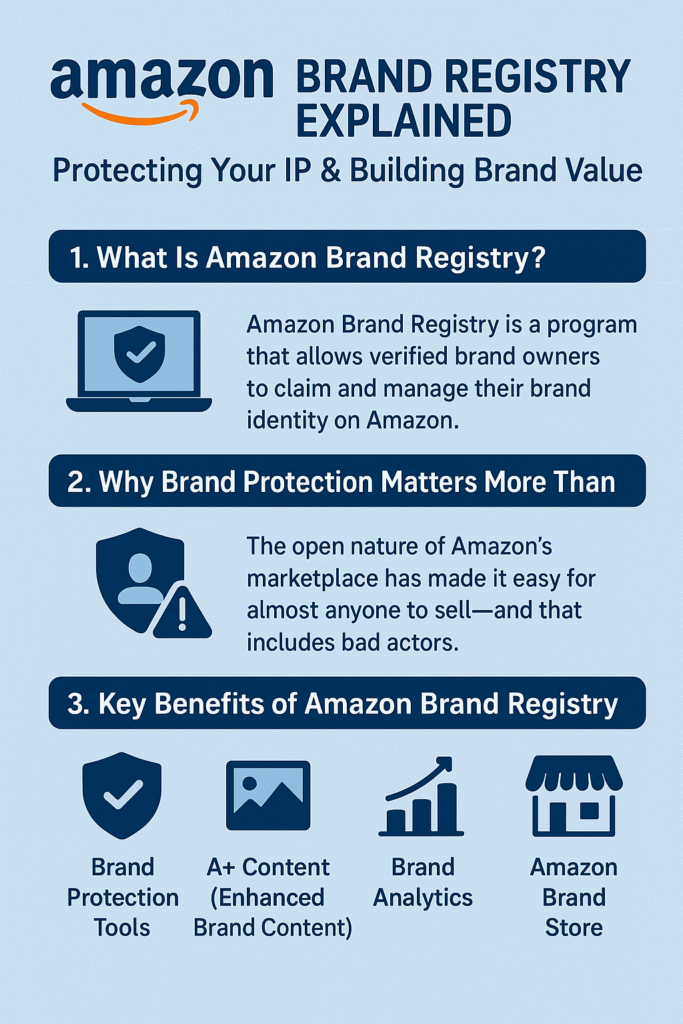
Amazon Brand Registry Explained: Protecting Your IP & Building Brand Value

Your brand is your business’s most valuable asset — but on Amazon, protecting it can be a full-time job.Counterfeiters, unauthorized resellers, and copycat listings can erode trust, lower prices, and steal your hard-earned traffic in days. That’s why Amazon introduced Brand Registry — a powerful program designed to give legitimate brand owners the tools they need to protect their intellectual property (IP), secure their listings, and build long-term brand equity. In this guide, we’ll break down exactly how Brand Registry works, why it’s essential for modern sellers, and how professional management can make it effortless. 1. What Is Amazon Brand Registry? Amazon Brand Registry is a program that allows verified brand owners to claim and manage their brand identity on Amazon.Once approved, sellers gain access to tools for IP protection, content control, advanced advertising, and data analytics — all under one dashboard. In short, it gives you the authority to decide how your brand appears and who gets to sell under your name. To qualify, you need: A registered and active trademark A matching brand name on your products or packaging An active Amazon seller account Once approved, your brand gains new powers inside the Amazon ecosystem. 2. Why Brand Protection Matters More Than Ever The open nature of Amazon’s marketplace has made it easy for almost anyone to sell — and that includes bad actors.Without brand protection, counterfeiters and hijackers can list fake or low-quality products under your listings, confusing customers and damaging your reputation. These issues lead to: Lost revenue from unauthorized sellers Fake reviews impacting your ratings Buyer mistrust and increased return rates Listing suppression or removal Amazon’s Brand Registry combats these problems by giving legitimate sellers exclusive control over their brand presence. 3. Key Benefits of Amazon Brand Registry When managed properly, Brand Registry goes far beyond protection — it enhances visibility, trust, and marketing capabilities. Here’s what you gain: 🛡️ A. Brand Protection Tools Amazon uses advanced machine learning to automatically detect and remove infringing or counterfeit listings.You also get access to a Report a Violation dashboard to manually flag unauthorized activity. 🎨 B. A+ Content (Enhanced Brand Content) Brand owners can use A+ Content to design visually appealing product pages with images, infographics, and comparison charts — proven to increase conversions by up to 20%. 📊 C. Brand Analytics Access to exclusive data, including keyword performance, customer demographics, and search behavior — critical for shaping your marketing strategy. 🏪 D. Amazon Brand Store Build your own branded storefront that showcases your full catalog, story, and promotions — giving you the feel of a standalone eCommerce site inside Amazon. 📢 E. Sponsored Brand Ads Brand Registry unlocks ad formats like Sponsored Brands and Sponsored Display — allowing you to promote your logo, tagline, and products together. 4. How Brand Registry Builds Long-Term Value Beyond immediate protection, Brand Registry helps build a foundation of trust and authority. When shoppers see consistent branding, authentic content, and a dedicated storefront, they’re more likely to buy — and buy again.This consistency strengthens customer loyalty, improves review quality, and raises your brand value over time. For growing sellers, it’s also an essential step before expanding to new marketplaces like Amazon UK or EU, since registered brands carry more credibility internationally. 5. How Professional Brand Registry Management Works While enrollment is simple in theory, managing a brand on Amazon can get complex — especially for multi-product or multi-region sellers.That’s why many businesses partner with an Amazon Brand Registry management agency to handle everything from registration to enforcement. A professional agency typically provides: Trademark registration support Brand Registry setup and approval Monitoring for counterfeit and hijacked listings Legal and compliance guidance A+ content creation and brand store design IP enforcement and reporting Ongoing analytics and reporting This hands-free approach ensures your brand stays protected while you focus on business growth. 6. The Process: From Registration to Brand Control Here’s what the Brand Registry journey looks like step by step: Trademark Preparation:You’ll need a registered trademark that matches your brand name. If you don’t have one, agencies can help you file it. Application Submission:Submit your trademark and seller details to Amazon for verification. Amazon Verification Code:Amazon contacts the trademark owner to confirm the connection (via email). Approval & Dashboard Access:Once approved, you’ll get full access to the Brand Registry tools. Content & Protection Setup:Your agency configures brand monitoring, sets up A+ content, and builds your storefront. 7. Common Mistakes Sellers Make with Brand Registry Even after approval, many sellers fail to take full advantage of Brand Registry due to: Not setting up their Brand Store Ignoring counterfeit alerts Poorly optimized A+ Content Not leveraging Sponsored Brand ads Lack of ongoing IP enforcement The program is powerful — but only if used strategically and continuously monitored. 8. How Brand Registry Improves Your Marketing Impact Once registered, your marketing potential expands dramatically. You can: Run headline ads showcasing your brand Use Brand Analytics to discover new keyword opportunities Optimize your Brand Store for seasonal traffic Strengthen SEO through A+ Content and improved CTRs Every marketing dollar becomes more efficient because you’re building traffic and conversions under a trusted, verified brand identity. 9. Why U.S.-Based Brand Management Gives You an Edge Working with a U.S.-based brand registry management agency offers several advantages: Faster response times and local expertise Knowledge of U.S. trademark laws and marketplace compliance Understanding of domestic buyer behavior Seamless coordination with your PPC and listing teams This local support ensures your brand protection and marketing strategies stay perfectly aligned. 10. The Bottom Line: Secure, Control, and Scale Your brand is more than a name — it’s your reputation, your trust, and your promise to customers.Without proper protection, all of that can disappear overnight. Amazon Brand Registry gives you control, credibility, and competitive advantage.And with expert management, it becomes a powerful tool for scaling your business safely and strategically. If you’re serious about building a lasting brand on Amazon, Brand Registry isn’t just an option — it’s your insurance policy for growth.
How Professional Amazon Listing Optimization Transforms Visibility & Sales

If your Amazon store isn’t getting the sales it deserves, the problem may not be your product — it’s your listing.A great product can easily get lost in Amazon’s crowded marketplace if your title, images, and keywords aren’t fully optimized for visibility and conversion. That’s why successful sellers invest in Amazon listing optimization services — to ensure every part of their listing performs at its highest potential.From keyword targeting to content and imagery, optimization is what transforms an ordinary listing into a sales magnet. 1. Why Listing Optimization Is the Heart of Amazon Success Amazon’s search algorithm (A10) prioritizes listings that perform well — those that attract clicks, convert buyers, and maintain good customer satisfaction.So, optimization isn’t just about keywords; it’s about creating a buyer experience that aligns with what Amazon rewards. Professional Amazon listing optimization agencies use data, psychology, and SEO best practices to help listings stand out, rank faster, and convert more effectively. In other words, it’s not just about being found — it’s about being chosen. 2. The Core Elements of Listing Optimization An optimized Amazon listing is like a well-designed storefront — it’s clear, persuasive, and visually engaging.Here’s what professionals focus on: A. Keyword Strategy Every optimization project starts with in-depth keyword research.Experts identify high-intent, high-volume search terms that align with your product.They also include semantic keywords and long-tail variations to expand your reach without competing on cost-heavy keywords. B. Title Optimization Your product title is the first thing shoppers see.It must balance readability with keyword inclusion — capturing attention while signaling relevance to Amazon’s algorithm.Example: “Insulated Stainless Steel Water Bottle – 32oz, BPA-Free, Leakproof, Hot & Cold Flask for Gym & Travel.” C. Bullet Points This is your chance to convert.Each bullet point highlights a feature, but professional copywriters turn features into benefits — explaining how your product improves the customer’s life. D. Product Description & A+ Content Descriptions reinforce trust and help customers visualize ownership.With A+ Content, brand-registered sellers can add visuals, infographics, and comparison charts that increase conversions by 10–20%. E. Images & Visual Storytelling Your images are your silent salespeople.Professional optimization includes: High-resolution product shots Lifestyle imagery showing usage Infographics for clarity 360-degree views or short videos These elements work together to convince buyers without reading a single word. 3. How Optimization Impacts Search Rankings Amazon’s ranking system relies on both relevance and performance metrics. Relevance: Achieved through correct keyword placement in titles, bullets, backend fields, and descriptions.Performance: Influenced by click-through rates, conversion rates, and review quality. Optimized listings improve both — increasing exposure in search results and boosting sales velocity. That’s why many sellers who invest in professional listing optimization see their products reach the first page organically within weeks. 4. The Role of Data in Listing Optimization Data-driven optimization separates amateurs from professionals.Top agencies use tools like Helium10, DataDive, and Jungle Scout to measure: Keyword search trends Competitor performance Click-through and conversion rates Seasonal search behavior This data ensures listings stay current and competitive, even as market trends shift. 5. Common Mistakes Sellers Make (and How to Avoid Them) Even good sellers often miss small but costly details: Keyword stuffing: Overloading listings with keywords reduces readability and credibility. Generic titles: Without clear benefits or differentiators, listings get skipped. Weak visuals: Poor-quality images destroy trust. No backend SEO: Neglecting hidden search terms limits discoverability. Ignoring updates: Amazon’s guidelines evolve frequently — outdated listings lose ranking. A professional optimization service eliminates these pitfalls, ensuring every element meets Amazon’s standards. 6. How Listing Optimization Boosts Conversions Optimized listings don’t just attract visitors — they convert them. Here’s how: Improved Clarity: Buyers instantly understand product features. Stronger Appeal: Professional copy speaks to emotion and intent. Enhanced Visuals: High-quality images make the product feel tangible. Better Trust: Accurate and consistent details reduce return rates. According to Amazon data, listings with A+ content and strong optimization can see conversion increases of up to 30% compared to unoptimized listings. 7. Integrating SEO and PPC for Complete Growth Listing optimization and advertising should work together — not separately. When your product page is optimized: PPC ads perform better, because visitors are more likely to convert. Organic rankings improve, as Amazon’s algorithm rewards higher conversions. Agencies that provide both optimization and PPC management create a compounding effect — every ad click strengthens your organic SEO, and every organic sale supports paid visibility. 8. Why U.S.-Based Optimization Services Deliver Better Results The U.S. Amazon market is unique — buyer behavior, product trends, and expectations differ from other regions.That’s why partnering with a U.S.-based Amazon listing optimization agency often delivers superior results. These agencies understand: Seasonal buying trends (e.g., Prime Day, holiday spikes) Regional keyword preferences Local compliance and category restrictions Local expertise ensures your listings resonate with American audiences, maximizing relevance and sales potential. 9. When to Re-Optimize Your Listings Optimization isn’t a one-time job.Amazon’s algorithm and customer trends evolve — and so should your listings. You should update or re-optimize when: Your rankings decline You launch new variations Competitors update their content Seasonal demand changes You start new PPC campaigns Regular audits keep your listings performing at their best year-round. 10. The Bottom Line: Optimization Is an Ongoing Investment Amazon rewards sellers who prioritize customer experience, and listing optimization is the foundation of that. If your listings aren’t converting or ranking, it’s not a reflection of your product quality — it’s a signal your content needs refinement. By investing in professional Amazon listing optimization, you’re not just improving words and images — you’re creating a sales engine that works 24/7, turning browsers into buyers. And when you combine that with strong advertising and brand protection, your Amazon business becomes nearly unstoppable.
Inside the Workings of a Top Amazon PPC Agency: Turning Clicks into Profits

Advertising on Amazon has evolved dramatically. What once was a simple keyword bidding game has now become a sophisticated, data-driven ecosystem.For U.S. sellers competing in one of the world’s busiest marketplaces, managing Amazon ads effectively can mean the difference between steady growth and shrinking margins. That’s where a professional Amazon PPC agency steps in — transforming random clicks into measurable profits through precise targeting, smart automation, and continuous optimization. If you’re running your own campaigns and seeing inconsistent results, it’s time to look at how the experts do it. 1. What Makes Amazon PPC Different from Regular Advertising? Amazon PPC (Pay-Per-Click) is unlike traditional digital ads. Here, you don’t pay for visibility — you pay for performance.Every click costs money, so every click must count. Unlike Facebook or Google, Amazon ads are shown to shoppers already searching to buy, not just browsing. That means properly managed campaigns can produce faster ROI — but only if your strategy aligns with real buyer intent. There are three primary ad types: Sponsored Products – Boost individual listings in search results. Sponsored Brands – Showcase your logo and product range at the top of the page. Sponsored Display – Retarget shoppers who viewed your product or similar ones. The challenge? Running all three profitably without overspending. That’s where a PPC agency’s expertise pays off. 2. Why Most Sellers Struggle with Amazon PPC Many sellers start out thinking they can manage PPC campaigns themselves. They launch automatic campaigns, pick a few keywords, and wait for sales. But within weeks, they face common problems: Rising ad costs (ACoS) Irrelevant clicks with no conversions Confusing reports that don’t explain performance Low ROI despite high ad spend Amazon’s algorithm changes constantly, and without real-time analysis, campaigns quickly lose efficiency. That’s why professional management matters — it ensures data, not guesswork, drives your results. 3. What a Professional Amazon PPC Agency Actually Does A top-tier Amazon PPC management agency USA combines human strategy with automation to ensure every ad dollar generates measurable return. Here’s what happens behind the scenes: A. Keyword Intelligence Agencies conduct in-depth keyword research using tools like Helium10, DataDive, and Jungle Scout.They focus on buyer-intent keywords — the phrases real customers use when they’re ready to purchase, not just browse. B. Campaign Structuring Instead of lumping all keywords together, experts design tiered campaigns (automatic, manual, branded, and competitor-based).This structure isolates high-performing keywords, making it easier to optimize budgets. C. Bid Optimization Using data models, agencies continuously adjust bids to lower your cost-per-click (CPC) while maintaining visibility.They test bids at different times of day and use dayparting to avoid wasted impressions. D. Negative Keyword Management To stop budget drain, agencies identify irrelevant keywords and block them — ensuring every click has genuine purchase intent. E. A/B Testing and Ad Copy Optimization Every ad image, headline, and placement is tested. The agency refines your creative elements for maximum engagement and conversion. F. Reporting and Analytics Weekly or monthly reports track metrics like click-through rate (CTR), ACoS, ROAS, and conversion rate — providing transparency and direction. 4. Turning Clicks into Profits — The Data-Driven Approach A strong PPC agency doesn’t just focus on clicks; it focuses on profit per click.That means using data insights to: Identify which keywords drive the highest revenue Eliminate unprofitable products or ads Redirect ad spend to proven performers This constant cycle of test, analyze, optimize, repeat is what turns PPC into a predictable sales engine instead of a random gamble. Here’s a simplified look at how data drives decision-making: Metric What It Means Agency Action CTR (Click-Through Rate) Measures ad engagement Improve creatives or keywords ACoS (Advertising Cost of Sales) Tracks ad spend efficiency Adjust bids to meet profit goals Conversion Rate How often clicks turn into sales Refine listings and ad copy ROAS (Return on Ad Spend) Total sales vs. ad spend Scale top-performing campaigns 5. The Role of Human Expertise + AI Automation Many agencies now use AI-driven PPC tools, but human strategy remains irreplaceable.While AI handles data analysis and bid adjustments, human managers handle creative judgment, market trends, and strategic scaling. The best agencies combine automation with human intuition — creating campaigns that are both efficient and emotionally resonant with buyers. 6. The Benefits of Partnering with a PPC Agency in the USA Choosing a U.S.-based agency gives sellers several advantages: ✅ Localized Understanding – American buyer behavior, seasonality, and pricing psychology.✅ Real-Time Communication – Time-zone alignment for faster campaign adjustments.✅ Market-Specific Optimization – Tailored ad content that resonates with U.S. audiences.✅ Compliance Expertise – Awareness of Amazon’s ad policies and performance requirements. This proximity leads to better collaboration and faster growth cycles. 7. Integrating PPC with Other Growth Strategies Amazon PPC doesn’t work in isolation.When paired with listing optimization, keyword research, and brand registry management, your entire ecosystem becomes more powerful. For example: PPC campaigns reveal top-performing keywords → used in organic listings. Improved listings lead to better Quality Scores → lower ad costs. Strong brand registry builds trust → higher click-to-conversion ratio. This integrated approach is how top sellers in the U.S. maintain consistent growth year after year. 8. How to Choose the Right PPC Partner When selecting a PPC agency, consider these key factors: Proven results and client testimonials Transparency in pricing and data access In-depth reporting tools and analytics dashboards Strategic rather than “set and forget” campaign management Experience managing both small sellers and established brands Your ideal partner isn’t just an ad optimizer — it’s a growth strategist invested in your success. 9. Realistic Expectations: PPC Is a Long-Term Investment Many sellers expect instant sales after hiring a PPC agency.While results can appear quickly, sustainable growth comes from consistent data refinement and ongoing testing. The first 30–60 days usually involve analysis and optimization. From there, your campaigns evolve into stable, scalable revenue channels — where ad spend is predictable and profitable. 10. The Bottom Line: From Ad Spend to Smart Investment A well-managed Amazon PPC strategy is no longer a cost — it’s a growth
Objections Amazon Sellers Might Raise — and How eCom Managers Turn Them Into Trust

Every Amazon seller dreams of more sales, better visibility, and stronger profits. But when it comes to hiring a PPC agency, hesitation is natural. Many sellers hesitate to hand over their advertising to someone else because of past experiences, budget concerns, or simple fear of losing control. So before we talk about solutions, let’s face the reality: What objections do Amazon sellers usually raise? Common Objections Amazon Sellers Might Raise When sellers think about hiring an Amazon PPC agency, these are the most common thoughts that hold them back: “I can manage PPC myself — why pay extra?” “Agencies are too expensive.” “I already worked with an agency before — they didn’t deliver.” “I don’t want to lose control of my account.” “How do I know I’ll actually get results this time?” “I’m already getting sales — why should I change anything?” “Agencies hide costs or trap clients with contracts.” “Maybe PPC isn’t even worth it.” Every single one of these objections is valid. Sellers have every reason to ask these questions — because most have been let down by agencies that overpromise and underdeliver. That’s exactly why eCom Managers approaches things differently. We listen, we explain, and we prove results. Let’s go step by step through these objections and see how we solve them. “I can manage PPC myself — why pay an agency?” Many sellers think PPC is just about picking keywords and setting bids. But in 2025, Amazon’s ad platform uses AI algorithms that require continuous optimization, keyword testing, and deep data analysis. When sellers try to manage campaigns themselves, they often spend too much time experimenting — and lose more money in testing than an expert would charge. Our Solution: At eCom Managers, we save you time, stress, and wasted budget. Our expert team runs PPC campaigns daily, backed by proven strategies and performance tracking. We treat your account like our own — ensuring every dollar is spent intelligently. In short: You focus on your business; we focus on scaling it. “Agencies are too expensive.” This is one of the biggest fears sellers have — that hiring an agency will eat into their profits. But the truth is, bad ads cost far more than a good agency ever will. Our Solution: We don’t charge for activity — we charge for performance. eCom Managers uses a performance-based pricing model where our success is tied directly to yours. If your sales grow, we grow. We don’t hide behind fancy reports or long invoices. You’ll always know what you’re paying for — and how much it’s earning you. “I worked with an agency before — and they failed.” We hear this objection a lot. Sellers have tried agencies that promised the world but delivered nothing. Their ad spend went up, but results didn’t. Our Solution: We start by doing what others skipped — a deep audit of your account. We show you exactly where the last agency went wrong and how we’ll fix it. In one real case, a home décor brand came to us after two failed agencies. Within 60 days, we dropped their ACOS from 48% to 27% and grew sales by 55%. We don’t ask for blind trust — we earn it with data and delivery. “I don’t want to lose control of my account.” This is a very real fear. Some agencies demand full access and leave sellers feeling sidelined. Our Solution: You’ll always retain ownership of your Amazon account. We only manage and optimize it — you stay in full control. We share live dashboards, weekly updates, and clear reports so you can see what’s happening in real time. You’ll never wonder what’s going on behind the scenes. At eCom Managers, transparency isn’t optional — it’s part of our process. “How do I know I’ll actually get results?” It’s a fair question. Every agency says they can deliver results, but few can prove it. Our Solution: We use data-backed forecasting before campaigns even begin. You’ll see potential outcomes based on real performance data from similar brands. Then, we deliver measurable progress — not vague promises. From ACoS improvements to profit tracking, we show results that are visible, trackable, and real. “I’m already getting sales — why change?” Many established brands think, “We’re doing fine — why bring in an agency?” But even successful sellers leave profit potential untouched. Our Solution: We don’t replace what’s working — we improve it. Our advanced systems find hidden growth areas like underperforming keywords, missed cross-sell opportunities, and untapped ad types. With us, your success doesn’t just continue — it accelerates. “Agencies have hidden costs or long contracts.” Sellers hate surprise bills or being locked into 6–12 month agreements. Our Solution: eCom Managers believes in clear pricing and flexible partnerships. No hidden fees. No forced contracts. We earn your loyalty through results — not paperwork. You can pause or adjust your plan anytime, and you’ll always know where your money goes. “Is PPC even worth it?” Some sellers still question if Amazon ads really work, especially if they rely on organic traffic. Our Solution: In 2025, PPC isn’t optional — it’s essential. Ads directly influence organic ranking, brand visibility, and long-term growth. We don’t just run ads — we connect PPC with listing optimization, product content, and brand strategy. That’s why our clients don’t just grow ad sales — they grow total sales. How eCom Managers Handles Objections Differently At eCom Managers, we don’t ignore objections — we welcome them. Each one gives us a chance to show what makes us different. Here’s how we handle them in our day-to-day work: We Listen First Every new client starts with a conversation, not a sales pitch. We listen to their concerns and  goals before offering a single strategy. We Prove Everything: From audits to reports, every number we share can be verified in your own Amazon dashboard. We Stay Transparent: No hidden fees, no fake metrics, no “fluff.” Our clients see the full picture at all times. We Build

Weekly eCom Growth Hacks in Your Inbox 2,000+ Subscribers
News letter form
Ecom Managers
Privacy Overview

This website uses cookies so that we can provide you with the best user experience possible. Cookie information is stored in your browser and performs functions such as recognising you when you return to our website and helping our team to understand which sections of the website you find most interesting and useful.