December 2025

Uncategorized

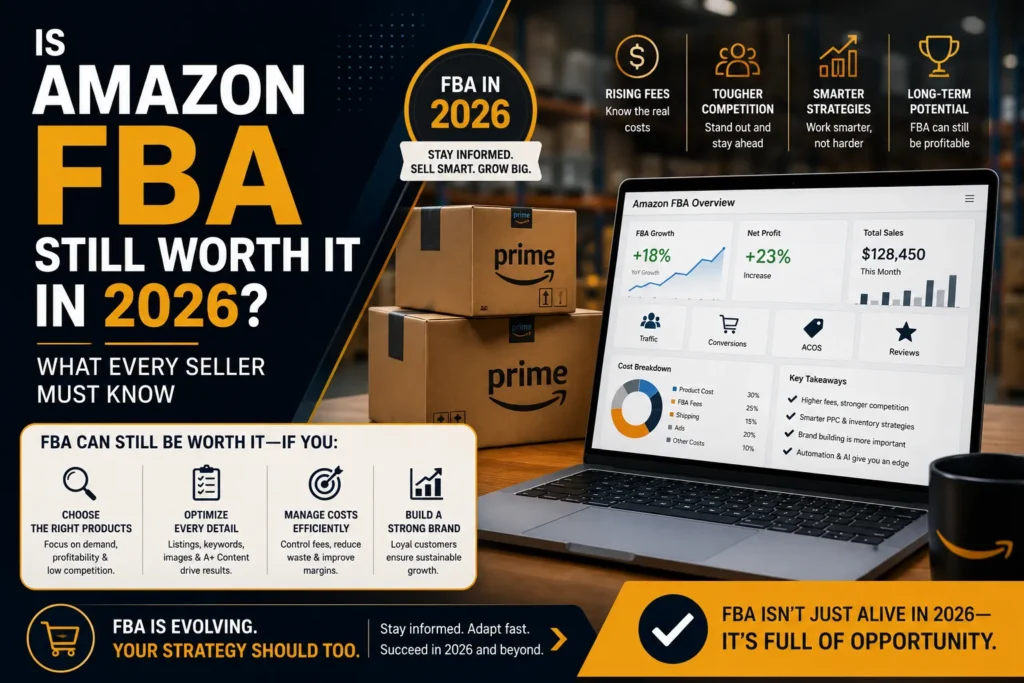
Is Amazon FBA Still Worth It in 2026? What Every Seller Must Know

With the e-commerce landscape getting more competitive by the year, the following question seems to be asked by most: Is Amazon FBA still worth it, and if so, how do I scale without burning profit? Of course, this is a valid concern. Profit margins get tighter, ad costs keep increasing, and there’s the continuous evolution of Amazon policies. Despite these challenges, it remains one of the most powerful business models in the world. In fact, more new million-dollar Amazon brands emerged between 2022 and 2025 than in any previous period. So, yes, the business is still quite viable. Yet, the secret to success in 2025 is more innovative strategies, better systems, and data-driven decisions. In this blog, we are going to break down why Amazon is a strong opportunity, what the real challenges are for sellers, and how you can scale more sustainably. We’ll also show how eCom Managers help sellers grow more efficiently and profitably. Why Amazon is Still a Strong Business in 2025 Here’s why Amazon continues to be one of the best online business models: Customer Demand is Higher than Ever Amazon’s customer base is growing each year. More and more buyers go to online shops, and Amazon remains their first choice for fast delivery, trusted and relied upon, with the widest variety. FBA Automation Reduces Operational Work Unlike other businesses, Amazon FBA takes care of: Warehousing Shipping Returns Customer service This enables the seller to focus on product research, marketing, and scaling rather than on logistics. Amazon Expands Internationally Marketplaces include: Amazon UAE Amazon KSA Amazon Singapore Amazon Australia They are growing rapidly, giving more global opportunities to sellers than ever. Brand Building is Easier With tools like: Amazon Brand Registry A+ Content Shop fronts Amazon Posting Amazon Ads With minimal additional cost, sellers can achieve impactful branding and conversion-rate uplifts. This means that Amazon remains highly viable-but for sellers who adapt. The Actual Challenges of Sellers in 2025 While the opportunity is significant, sellers are required to deal with: Increasing PPC Costs This is due to stronger competition, hence making advertising more expensive. This can eat into profit margins if the ads are not run correctly. Constant Changes in Policies Amazon rules change often. Sellers fear that Suppressing listings Documentation requests Account health warnings This unpredictability causes stress. Product Saturation Too many niches are overcrowded. It no longer works to launch a random product; you need substantial research and differentiation. Challenges of Supply Chain Delays in shipment, surging freight rates, and inventory shortages can also dent profitability. That is why scaling requires strategy and not guesswork. How Sellers Can Stay Competitive and Scale Successfully Below are the strategies of high-performing sellers in 2025: Choose Products Based on Data, Not Guesswork Winning products share characteristics like: Strong demand Low competition High-profit margins Novel features or higher quality Evergreen customer needs Base decisions on real market data instead of instinct with the use of tools like Helium 10 or Jungle Scout. eCom Managers will also help identify profitable product opportunities through in-depth market research. Fully Optimize Your Listings A perfectly optimized listing increases conversions and reduces ad spend. The main focus areas include: High-quality images Keyword-rich titles Benefit-driven bullet points Strong A+ Content Strategy review Competitive pricing It can give tough competition to others with an optimized listing. Improve PPC Efficiency The goal isn’t to decrease ACOS, it’s to increase total profit. To scale ads properly: Identify winning keywords Waste ad spend elimination Build a sound PPC funnel. Track TACOS instead of only ACOS eCom Managers offers comprehensive PPC optimization to help sellers grow profitably and sustainably. Fortify Your Supply Chain A stable supply chain means lower costs and fewer stockouts. Improve your backend with: Long-term relationships with suppliers Improving negotiation Forecasting tools Back-up suppliers Quality control checks It also dramatically lessens the incidence of supply chain problems, consequently increasing profit. Expand Beyond Amazon The biggest brands don’t rely on only Amazon. You can extend to: Shopify Walmart TikTok Shop Etsy eBay International Amazon Marketplaces This reduces risk and grows revenue all at the same time. eCom Managers help sellers expand and build multi-channel operations. How eCom Managers Help You Stay Competitive To help sellers grow confidently, eCom Managers provides: Complete Account Management Optimization of listings PPC management Product research Keyword ranking strategies Supply chain support Account health monitoring Brand growth consulting Our mission is simple: Help Amazon sellers scale safely, sustainably, and at profit. Final Thoughts: Amazon remains a powerful and profitable opportunity in 2025-but only for sellers driven by strategy and not at the whims of luck. Success comes to those who keep a sharp eye on their finances, stay data-driven, and work consistently. To remain competitive, less stressed, and scale faster, eCom Managers is here to help in every stage of your Amazon journey: from product research to PPC account health and branding, supply chain, and more.

Uncategorized

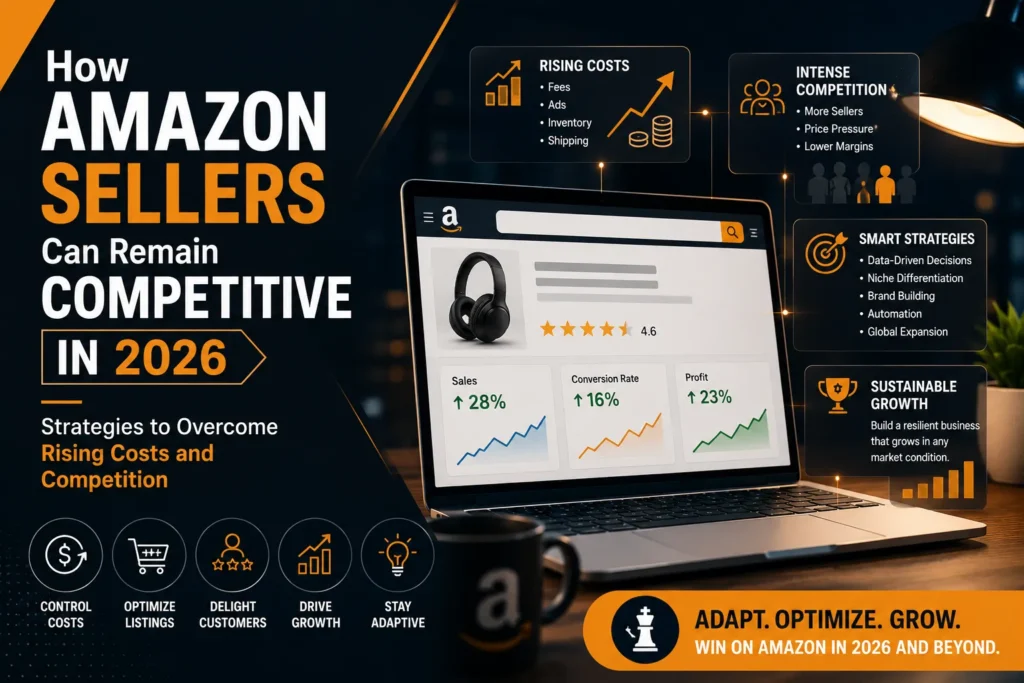
How Amazon Sellers Can Remain Competitive in 2026: Strategies to Overcome Rising Costs and Competition

The Amazon marketplace in 2025 is the most competitive it’s ever been: PPC costs are growing, new sellers enter the market every day, and Amazon constantly changes its policies. At the same time, customers expect speedier delivery, higher-quality products, and a more premium shopping experience. Despite these challenges, many sellers are still growing rapidly. The difference? They are getting smarter, making data-driven decisions, and optimizing every part of their business. In this blog, we break down some easy, real-world ways to ensure you stay competitive in 2025- no complicating jargon, just actionable steps. And if you want expert help in managing PPC, optimizing your listings, or improving operations, eCom Managers is here to support your business every step of the way. 1. Know that the costs of PPC keep going, but you can still win The cost-per-click on Amazon has increased significantly in 2024–2025. Competition, more ad placements, and AI-driven bidding have driven up prices. Many sellers panic when their PPC costs become too high. But your objective is not to cease advertising; it is to advertise more intelligently. How to Overcome Growing Costs in PPC Focus on high-converting keywords instead of broad, expensive keywords. Run negative targeting to avoid wasting money. Improve your listing quality so every click converts better. Work on reducing TACOS, not just ACOS: Use exact match for high-intent keywords. When PPC is done right, it is the strongest arm for ranking and sales. If you’re looking for expert help running profitable PPC campaigns, look no further than eCom Managers. We offer full-service PPC setup, optimization, and weekly monitoring. 2. Focus on Branding rather than Selling Generically In 2025, Amazon rewards brands, not random sellers. And customers trust products that feel professional, consistent, and premium. Empower Your Brand With: A memorable logo and brand identity Good quality packaging Lifestyle images for professionals A+ Content and Brand Story An integrated Amazon Storefront A strong brand drives click-through and conversion rates and builds customer trust. This is also where differentiation from cheap competitors happens. 3. Listing Optimization with Trends 2025 Listing optimization is no longer just about keywords. Amazon favors listings that deliver a better shopping experience. Update Your Listings With: Lifestyle imagery of real people Video demonstrations Comparison charts Before/after visuals Clear, benefit-driven copy Mobile-friendly text structure The customer has to make decisions within seconds. Optimized listings enhance conversions and reduce the pressure on PPC. eCom Managers can help you upgrade your listing content, keywords, images, and A+ designs to match 2025 standards. 4. Provide quicker delivery and a superior customer experience. Customer expectations keep on increasing. Many shoppers nowadays compare Amazon listings just as they would compare brands on Shopify or social media. Enhance Customer Experience Through: Stockout avoidance through effective planning Keeping inventory in multiple FBA locations Improved product accuracy for reduced return rates quick response to messages Inserts are used to explain the use and care of products. Happy customers = better reviews = better ranking. Base Decisions on Facts Guessing no longer works on Amazon. Tools like: Helium 10 Jungle Scout Product Opportunity Explorer Amazon Business Reports Brand Analytics Its purpose is to help sellers understand performance, competition, and demand. Track Key Metrics every week: Conversion rate Click-through rate Organic vs ads ratio TACOS Inventory health Keyword ranking Reasons for refund and return When done right, with data, you avoid risky products, improve profitability, and scale much faster. If you need a helping hand to analyze your data and make smarter decisions, then eCom Managers offers reporting, insights, and growth strategies crafted just for your brand. 6. Diversify Your Sales Channels Amazon is mighty—but relying on one marketplace is risky. Successful sellers in 2025 build multiple streams of income. Expand Into: Shopify for brand control Walmart Marketplace TikTok Shop eBay or Etsy for specific niches Wholesale partnerships Sellers that diversify grow faster and protect themselves from sudden Amazon changes. 7. Long-Term Growth Strategy Success on Amazon requires planning and not blind launches of various products. A 2025 Growth Plan Should Include: A product roadmap Keyword strategy Advertisement plan Forecasting inventory Branding Enhancements International expansion Operations and automation This approach keeps your business organized, steady, and scalable. With eCom Managers, the seller receives complete strategic guidance, ensuring each step of your growth is planned and optimized. Final Thoughts: The Amazon marketplace is not dying-it’s evolving. And the sellers who are also changing with it are earning huge success. Competing in 2025 requires: Upgrade your brand. Optimize your listings. Master your PPC. Improve your operations. Use data wisely. The key to recovery is to think long-term. Diversify your channels. If you are seeking expert assistance in growing your Amazon brand, then eCom Managers is the go-to agency for turning key solutions on PPC, listing optimization, account management, sourcing, logistics, and complete brand strategy.

blog

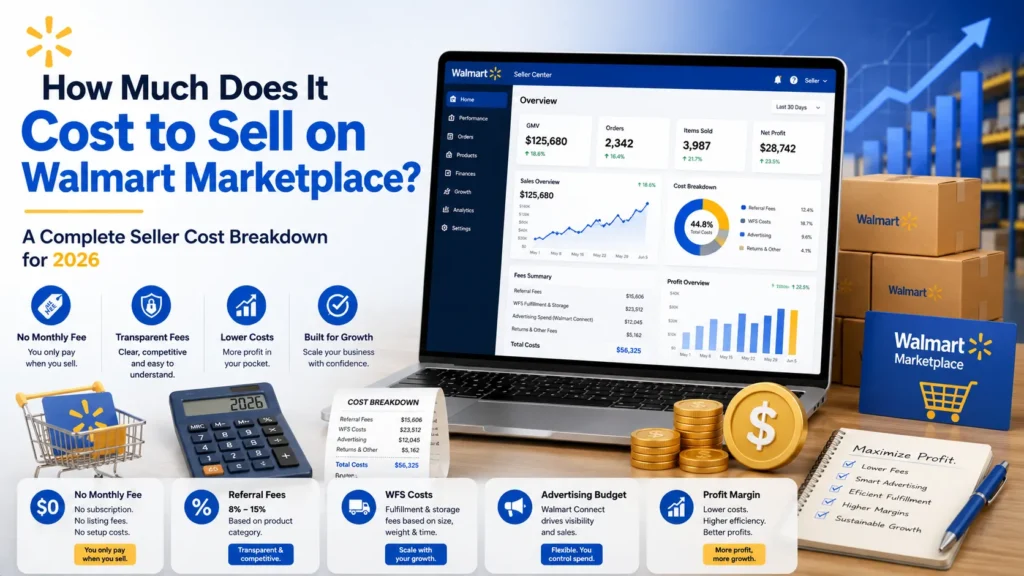
How Much Does It Cost to Sell on Walmart Marketplace in 2026?

Walmart Marketplace is one of the fastest-growing eCommerce platforms in the world. With millions of visitors every day, thousands of sellers, and strong brand trust, it has become the next big destination after Amazon. But before joining, every seller asks one important question: How much does it cost to sell on Walmart Marketplace? In this detailed guide, we explore every fee, cost, and hidden expense. This will help you decide if Walmart Marketplace is profitable for your business and how you can start selling with the right budget. Why Walmart Marketplace Is Worth Considering Walmart.com receives over 100 million monthly visitors. These customers trust Walmart for fast delivery, competitive pricing, and great service. For sellers, Walmart Marketplace offers several benefits: Massive exposure without owning a physical store No monthly subscription fee Transparent commission structure Fulfillment options through Walmart (WFS) Strong customer support system Compared to marketplaces like Amazon, Walmart is newer for third-party sellers, so competition is still lower. This means more visibility and a better chance of ranking your products. The Most Important Question: Walmart does NOT charge a monthly subscription fee. You don’t pay for: Monthly plan Listing fees Setup fees Annual membership You only pay when you make a sale. This makes Walmart one of the most profitable and risk-free marketplaces to sell on. Understanding Walmart Referral Fees Walmart charges a referral fee on every sale. It is a percentage of the selling price, and the rate varies by category. Here are the average referral fees: Product Category Referral Fee Clothing & Accessories 15% Beauty & Health 15% Electronics 8% Home & Kitchen 15% Jewelry 20% Sports & Outdoor 15% Automotive 12% Tools & Hardware 12% Baby 15% For most sellers, the fee is between 8% – 15%. No Monthly Subscription Fee Amazon charges: $39.99 monthly subscription for Professional Seller Extra FBA storage and fulfillment fees But Walmart charges zero monthly fee. You can list unlimited products, upload inventory, and start selling without paying in advance. For smaller brands and new sellers, this is a huge benefit because every dollar saved is profit. Other Costs You Should Know About Although Walmart doesn’t charge listing or subscription fees, there are other costs to consider. These include: Shipping costs Fulfillment fees (if using Walmart Fulfillment Services) Storage fees (WFS warehouse) Returns & customer service Advertising Let’s break them down. 1. Shipping Costs If you ship orders yourself, you must manage: Packing Shipping labels Carrier charges (UPS, FedEx, USPS) Walmart requires fast shipping. That means using reliable courier services. If your orders are late, your seller account will get penalties. Many sellers include shipping cost inside product pricing, so it feels like Free Shipping to buyers. 2. Walmart Fulfillment Services (WFS) Similar to Amazon FBA, Walmart offers WFS. You send your stock to Walmart warehouse. Walmart stores, picks, packs, and ships orders. They also handle returns. WFS Costs Include: Storage fee (based on cubic feet) Fulfillment fee (based on weight/dimensions) Example of fulfillment fee for 2-lb item: $5.75 per unit + storage Even though it costs money, conversion rates are higher because customers get: Fast delivery badge Reliable return handling Competitive shipping Most sellers find WFS profitable because sales increase when customers see faster shipping. 3. Storage Fees If your inventory is sitting in Walmart warehouse, storage fees apply monthly. Average storage fee: $0.75 – $0.95 per cubic foot If products are slow moving and stay long in the warehouse, fees increase. The best solution is keeping smart inventory levels based on demand. 4. Return Costs Returns are a reality in eCommerce. When customers return products, you may incur: Return shipping fees Restocking cost Product damage Walmart may handle some returns, but the cost of processing will affect your profit margin. 5. Advertising (Optional But Recommended) Walmart has its own advertising platform called Walmart Connect. You can run: Sponsored Products Display ads Search ads Advertising is not mandatory, but if you want fast results and visibility, you will likely spend money on ads. Typical starting budget: $20 – $50 per day The good news: Competition is lower than Amazon Cost per click is cheaper ROI is often better What Is the Total Cost to Sell on Walmart Marketplace? Here is a realistic example: Product Sale Price: $100 Expense Cost Referral Fee (15%) $15 Shipping or Fulfillment $5 – $8 Advertising (optional) $2 – $5 Return Risk $1 Total Cost: $23 – $29 Net Profit: $71 – $77 per sale This is highly profitable, especially when compared with Amazon or eBay where subscription and storage costs can be higher. Can You Sell on Walmart Without Inventory? Yes. Many sellers use: Walmart Dropshipping Walmart DSV 3rd-party fulfillment centers This means you do not need to hold stock at home. However, Walmart is very strict about delivery times. If your dropship supplier is slow, your account may get suspended. Hidden Costs You Should Be Aware Of There are no hidden fees from Walmart, but certain business expenses are often forgotten: Product photography Listing optimization Inventory management tool Branding & packaging Customer service agents These costs are normal for every eCommerce business. They help build a professional brand and increase conversion. What About Ecommanagers? How We Help Sellers Selling on Walmart Marketplace becomes easier when you have a professional team managing everything for you. At Ecommanagers, we offer complete Walmart account management services: Our services include: Marketplace approval & setup Product listing and optimization Keyword research and SEO Order & inventory management Sponsored ad campaigns WFS setup & logistics Reporting and analytics Account health management We make sure sellers grow faster, spend less, and earn more profit. Is Walmart Cheaper Than Amazon? In many cases, yes. Here’s a simple comparison: Platform Monthly Fee Referral Fee Fulfillment Option Walmart $0 8% – 15% WFS Amazon $39.99 8% – 20% FBA eBay $21+ 10% – 12% 3rd-party No monthly fee makes Walmart very attractive for new sellers. How to Reduce Costs on Walmart Marketplace Here are smart strategies: Use WFS for Fast Shipping Faster delivery

Scroll to Top
Privacy Overview

This website uses cookies so that we can provide you with the best user experience possible. Cookie information is stored in your browser and performs functions such as recognising you when you return to our website and helping our team to understand which sections of the website you find most interesting and useful.