- / Amazon Advertising Metrics Guide: ACoS vs TACoS Explained
Amazon Advertising Metrics Guide: ACoS vs TACoS Explained
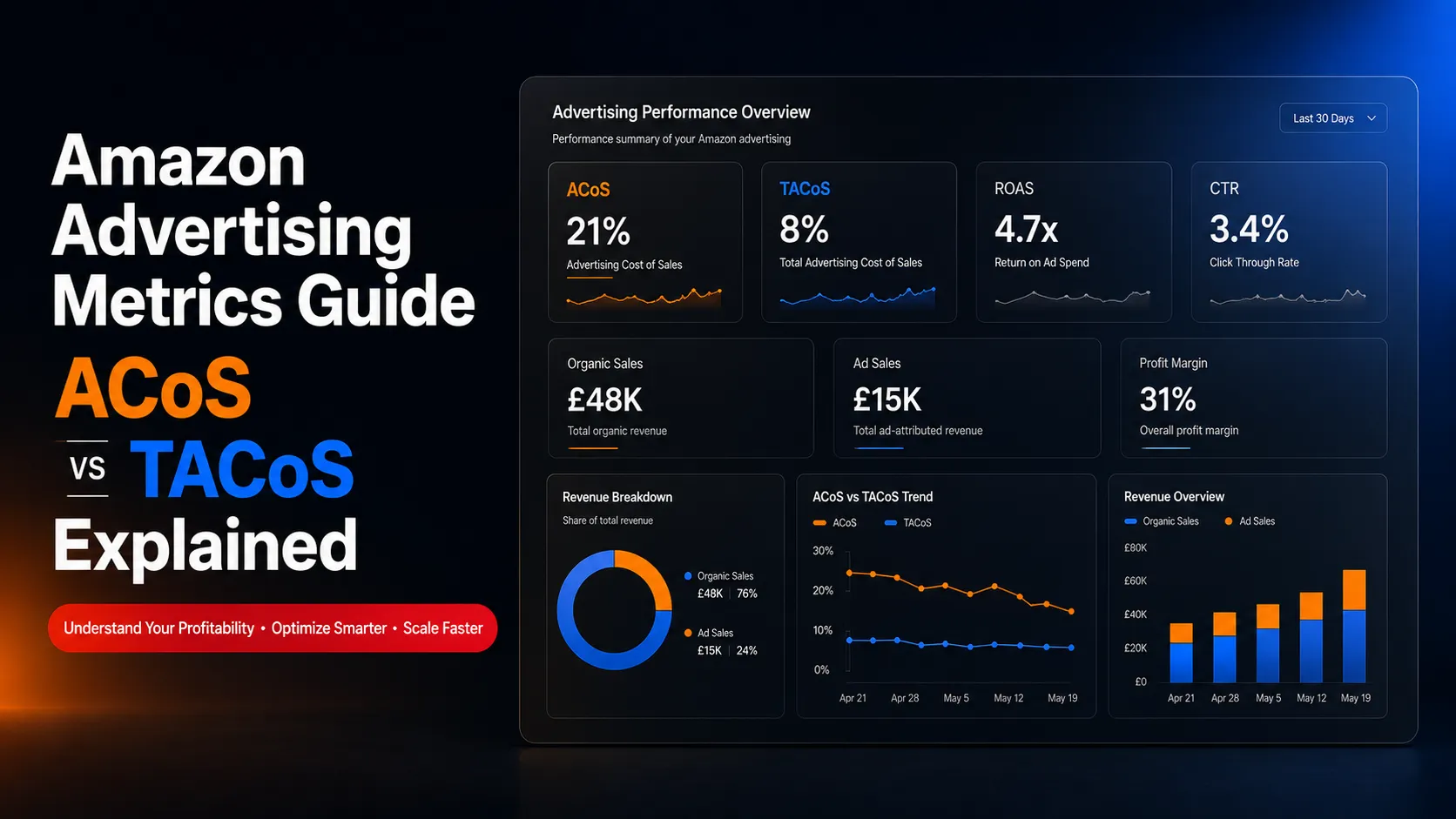
Most Amazon sellers know their ACoS number. But ask them about TACoS and you’ll often get a blank stare or worse, a confident but wrong answer.
In this guide, EcomManagers breaks down both metrics clearly, what they mean, how to calculate them, when to use each one, and how to use them together to make smarter advertising decisions in 2026.
What Is ACoS on Amazon?
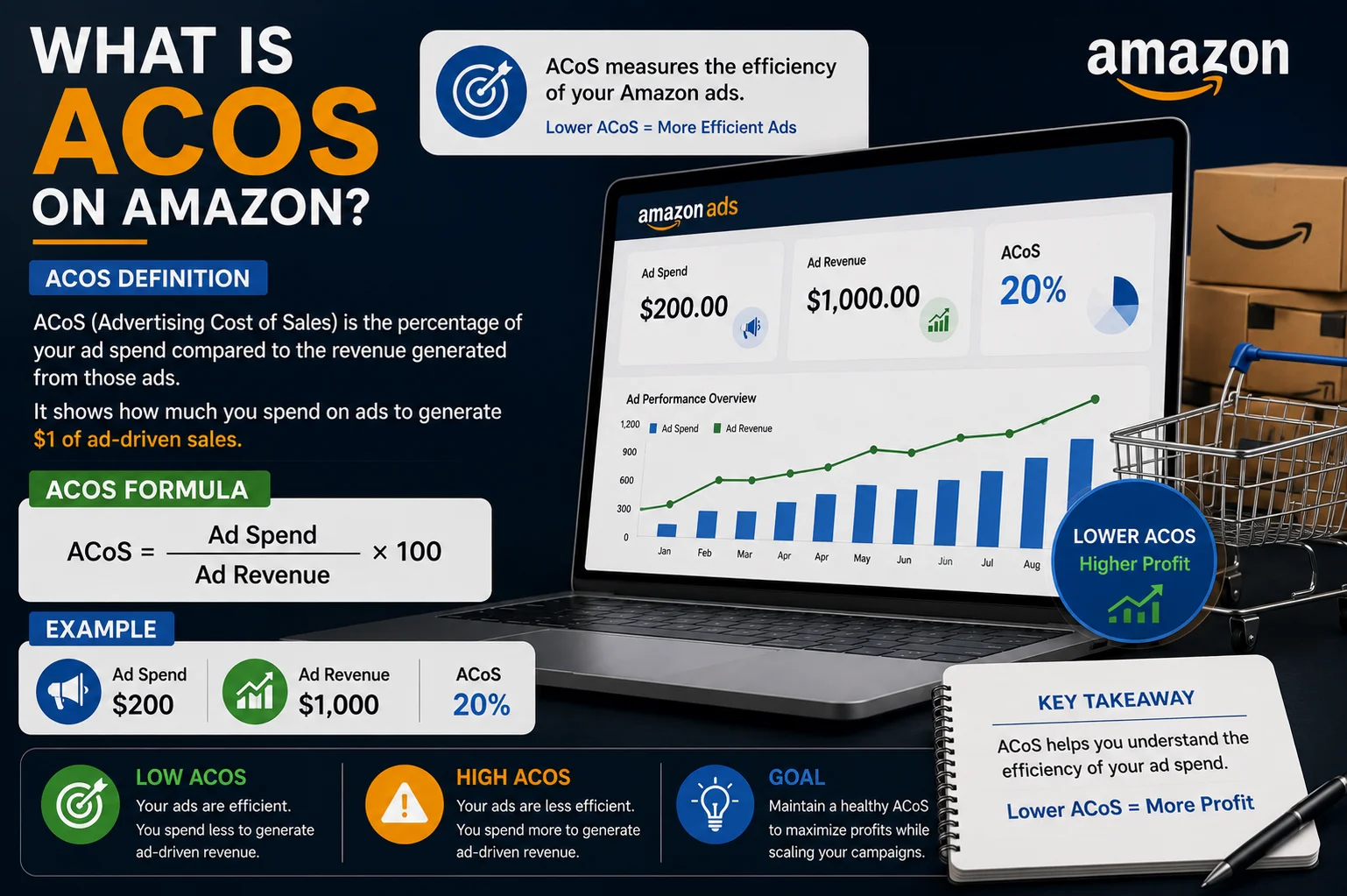
ACoS Definition and Formula
ACoS Formula:
ACoS = (Ad Spend ÷ Ad Revenue) × 100
If you spent $200 on ads and those ads generated $1,000 in sales, your ACoS is 20%.
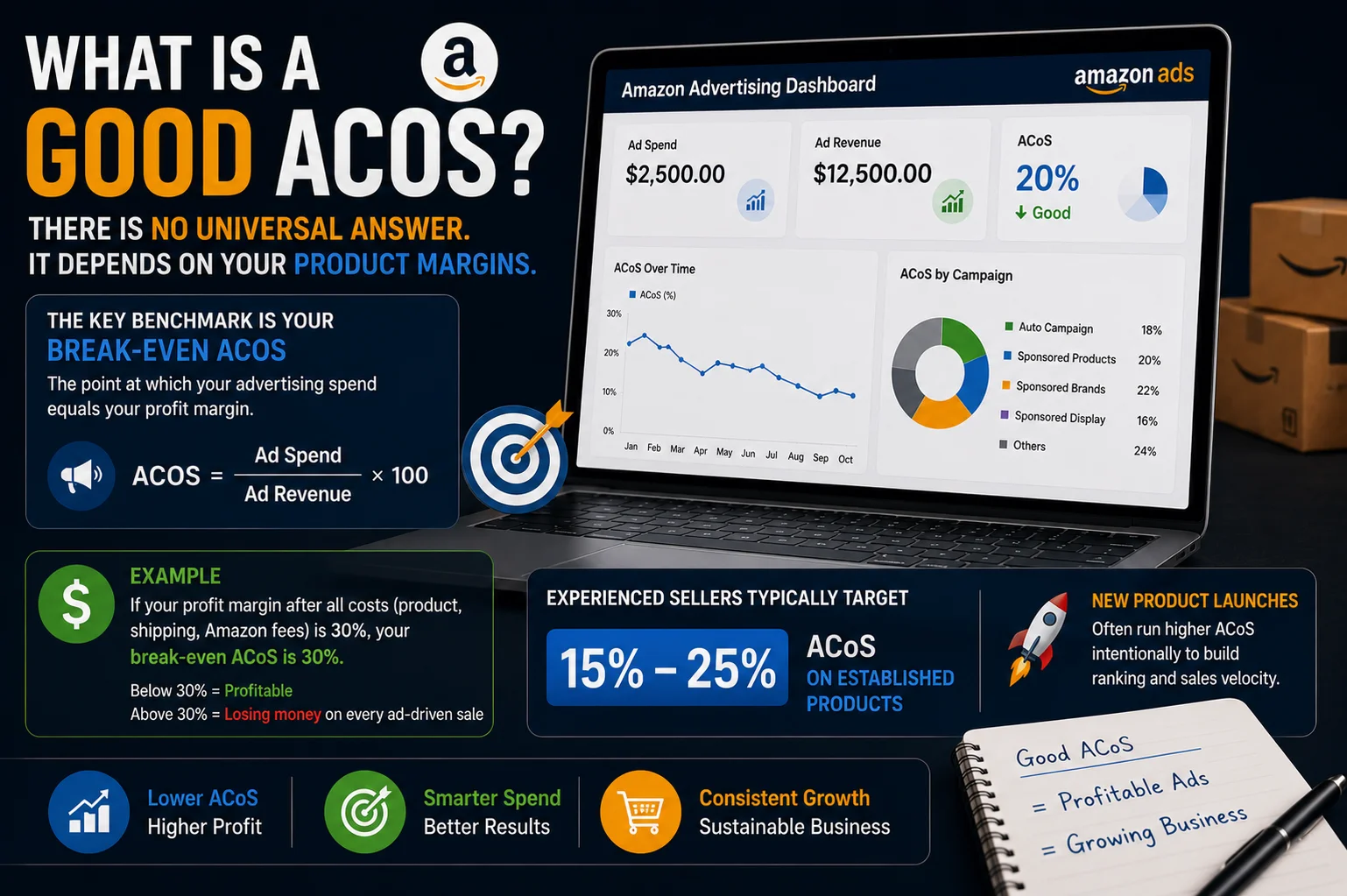
What Is a Good ACoS?
What Is TACoS on Amazon?
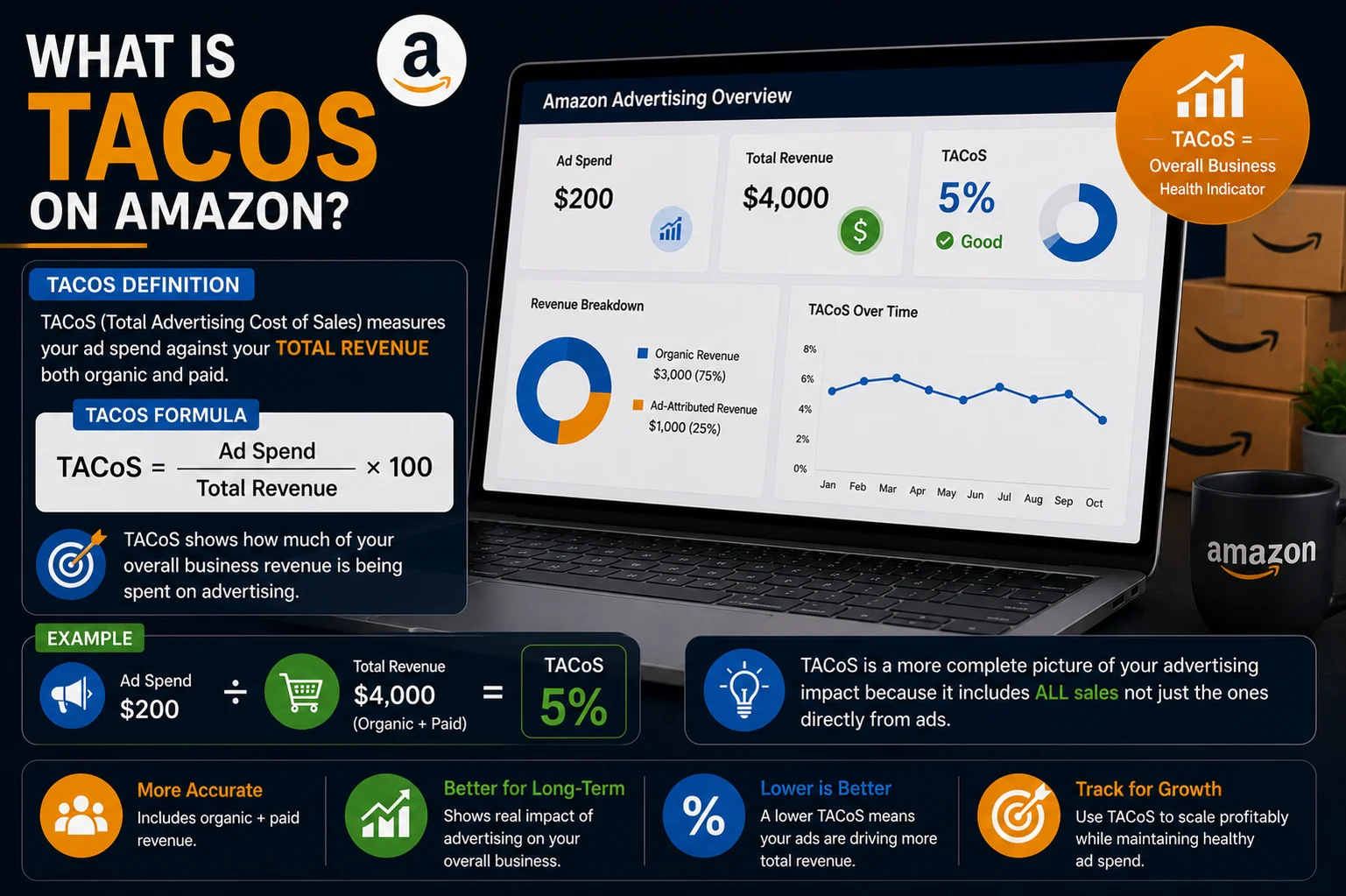
TACoS Definition and Formula
TACoS Formula:
TACoS = (Ad Spend ÷ Total Revenue) × 100
Using the same example: if you spent $200 on ads and your total revenue (organic + paid) was $4,000, your TACoS is 5%.
ACoS vs TACoS: Side-by-Side Comparison
| Metric | Formula | What It Shows | The Risk |
| ACoS | Ad Spend ÷ Ad Revenue | Paid performance only | ACoS can improve while organic rank collapses |
| TACoS | Ad Spend ÷ Total Revenue | Full business health | Exposes when PPC masks organic deterioration |
ACoS vs TACoS: Why the Difference Matters
Two Scenarios That Prove the Point
Your ACoS is 35%, which looks high and potentially unprofitable. But your TACoS is 8% because your organic sales are strong and growing. In this case, your ads are working, they are building ranking and driving organic velocity. The business is healthy.
Your ACoS is 18%, which looks great. But your TACoS is also 17% because almost all your sales come from paid ads with very little organic traffic. If you pause your ads, your revenue disappears. This is a fragile, high-risk position.
TACoS reveals organic dependency in a way that ACoS simply cannot. In 2026, with Amazon’s advertising costs rising across most categories, reducing organic dependency is one of the most important goals any serious seller should have.
To see how EcomManagers approaches Amazon PPC management with a TACoS-first framework, explore our full service breakdown.
How ACoS and TACoS Move Together
Three Patterns to Watch
This is a positive signal. Organic sales are growing faster than ad spend. Keyword rankings are improving and your product is gaining traction beyond paid traffic.
Most revenue is coming from ads organic presence is weak. This is normal for new product launches but should not persist long term.
This is a warning sign. Advertising is becoming less efficient and organic growth is not compensating. Common causes include bids that are too high, a listing conversion rate that has dropped, or a competitor taking your organic traffic.
Our Amazon PPC case study on reducing ACoS by 50% in 3 months shows exactly how these metrics shifted as we optimized a real seller's account worth reading if you want to see this in practice.
How to Use ACoS and TACoS Together
Use ACoS for Campaign-Level Decisions
If you want a structured approach to this, read our complete guide to Amazon PPC management for a step-by-step optimization framework.
Use TACoS for Business-Level Decisions
Practical Targets for Both Metrics
Established Products
- Target ACoS: 10–20% below your break-even ACoS
- Target TACoS: 8–15% depending on your category and margin structure
New Product Launches
- Accept higher ACoS (30–50%) while TACoS is naturally high
- Watch for TACoS to decline as organic ranking improves
Other Amazon Advertising Metrics You Should Track
While ACoS and TACoS are the most important metrics for profitability analysis, they work best alongside a few other key numbers.
ROAS (Return on Ad Spend)
ROAS is the inverse of ACoS expressed as a multiplier. ROAS = Revenue ÷ Ad Spend. An ACoS of 20% equals a ROAS of 5x. Some sellers prefer ROAS because it frames performance as a multiplier rather than a percentage cost.
CTR (Click-Through Rate)
CTR measures how often people who see your ad actually click on it. A low CTR usually means your main image or title is not compelling enough for the search term you’re targeting. Industry average CTR on Amazon is around 0.4–0.5%, anything above 0.5% is generally strong.
CVR (Conversion Rate)
CVR measures how many clicks result in a purchase. This is where listing quality matters most. If your CTR is strong but CVR is low, your listing images, bullet points, price, or reviews are failing to convert interested shoppers. Average Amazon conversion rates sit between 10–15% for established products.
Impression Share
Impression Share tells you how visible your ads are relative to total available impressions for a keyword. A low impression share despite competitive bids usually indicates a quality score or relevance issue.
Understanding these metrics together is what separates sellers who manage their Amazon account strategically from those who optimize in the dark.
Getting Your Amazon Advertising Metrics Right
Understanding ACoS and TACoS is the starting point, but putting them to work consistently requires a structured approach to campaign management, bid optimization, and keyword strategy.
Many sellers know their numbers but still struggle to move them in the right direction. The optimization process is time-consuming, technical, and constantly changing as Amazon updates its advertising platform.
If you want data-driven keyword targeting to improve both ACoS and TACoS simultaneously, explore our guide on Amazon keyword research and smart targeting.

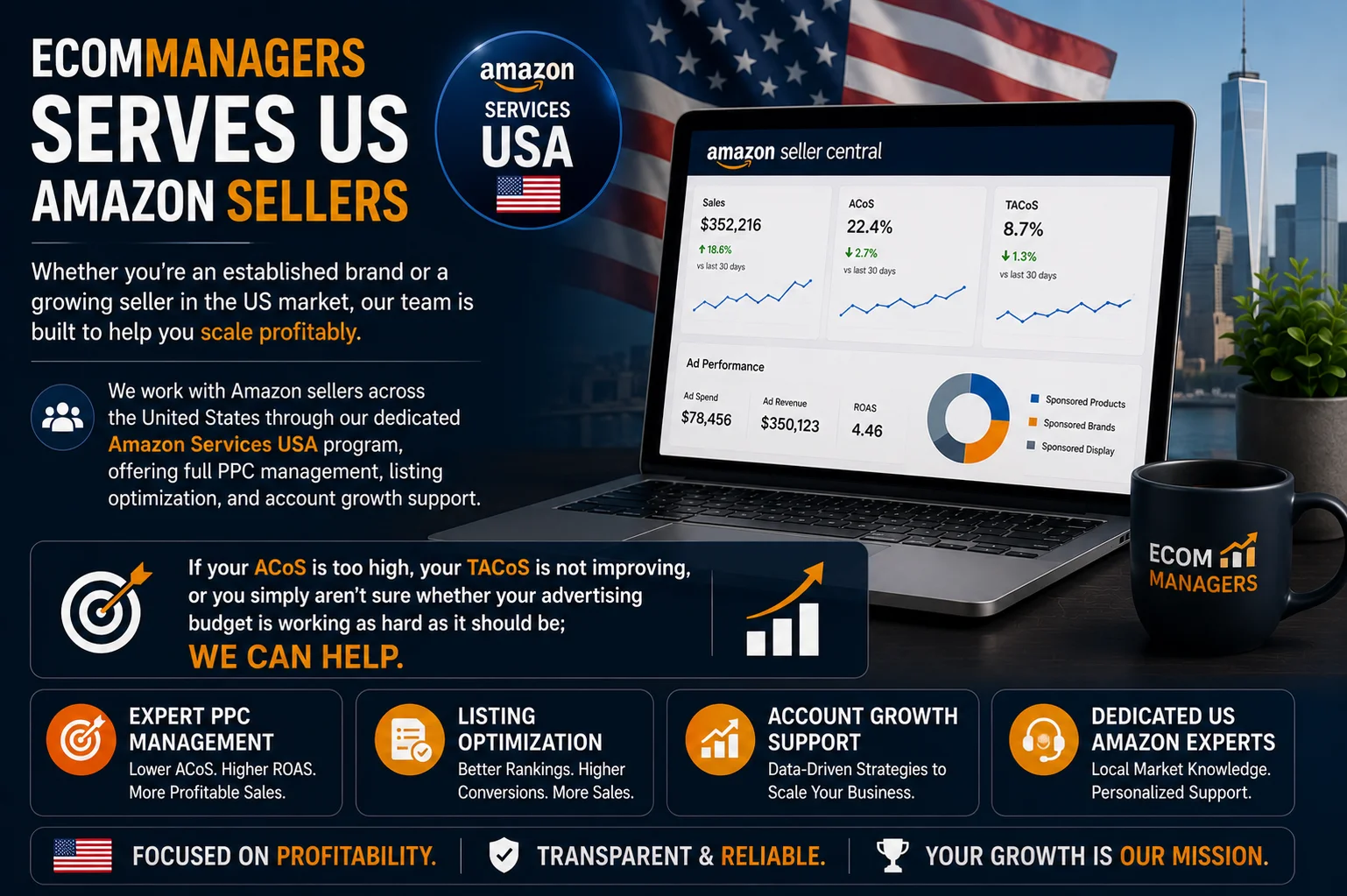
EcomManagers Serves US Amazon Sellers
Whether you’re an established brand or a growing seller in the US market, our team is built to help you scale profitably. We work with Amazon sellers across the United States through our dedicated Amazon Services USA program, offering full PPC management, listing optimization, and account growth support.
Conclusion
Most Amazon sellers optimize ACoS and never see the full picture. TACoS is what separates sellers who are truly profitable from those who are just buying revenue. Track both metrics consistently ACoS for campaign-level decisions, TACoS for overall business health. When TACoS trends down while revenue grows, your Amazon strategy is working. At EcomManagers, every account is managed with this exact data-driven approach. Ready to scale profitably? Explore our Amazon PPC Management Services today.