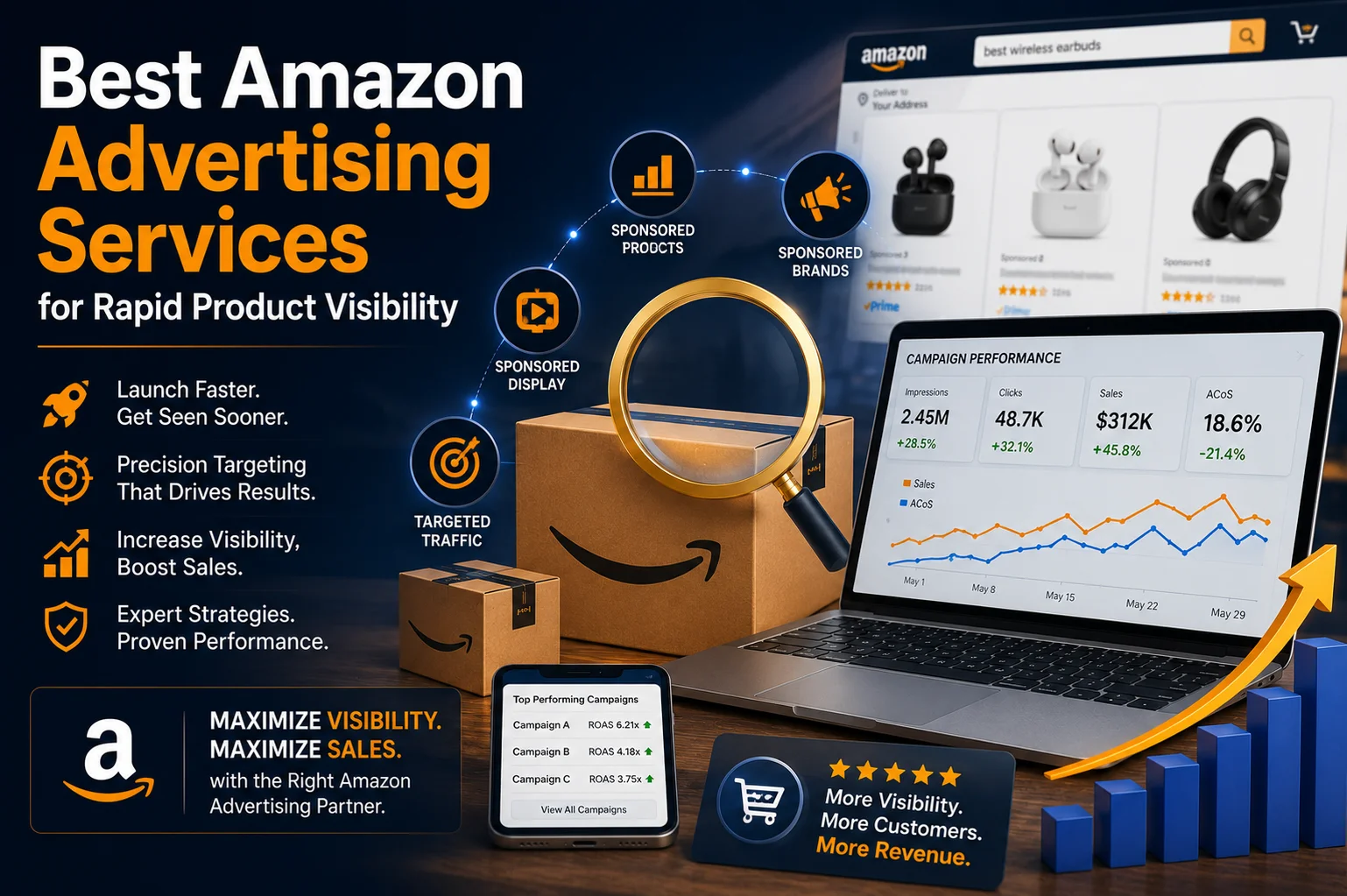
Sponsored Products: Immediate Placement in Search Results
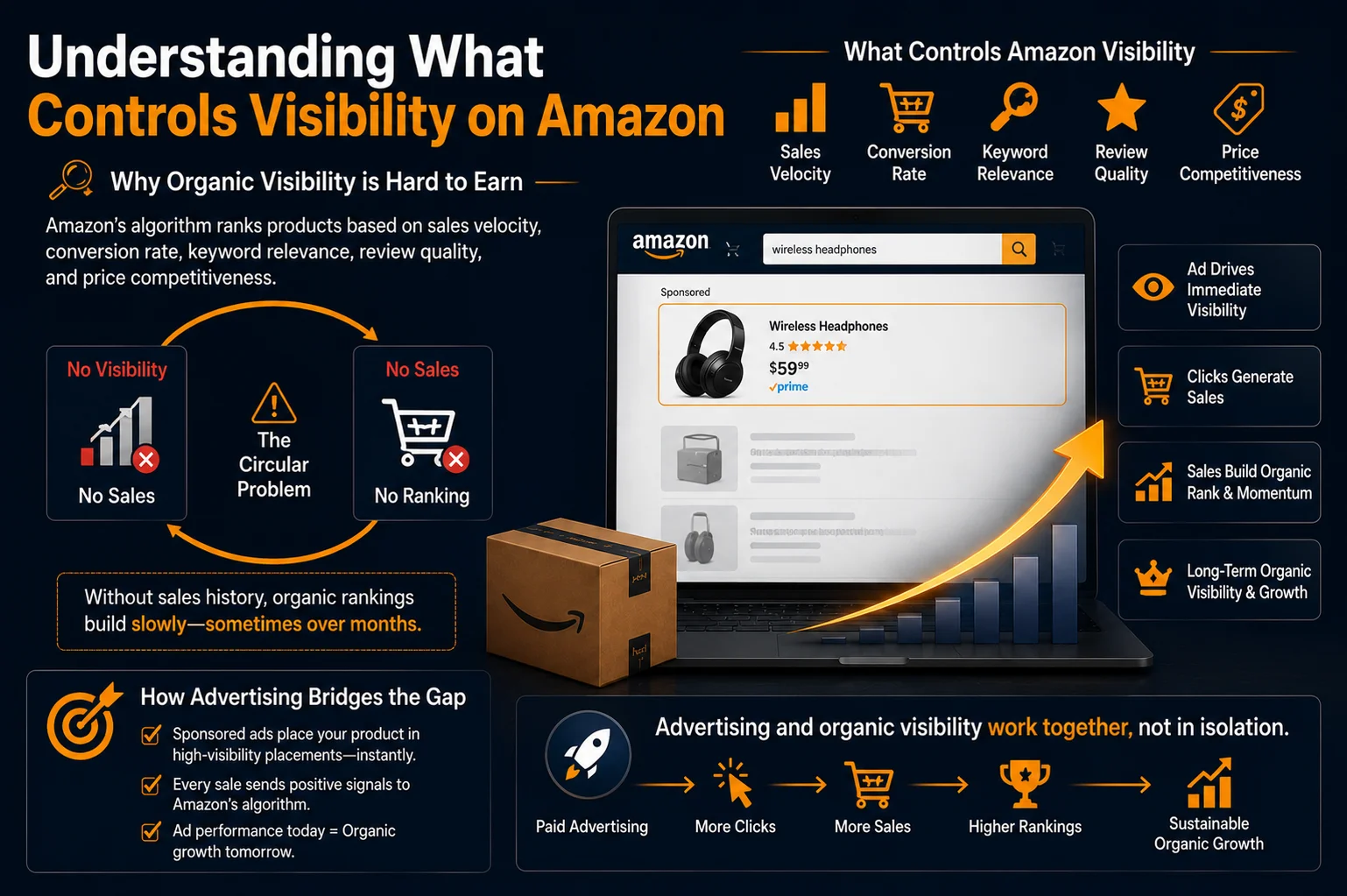
Sponsored Products is the most direct path to rapid visibility on Amazon. These ads appear within organic search results and on product detail pages blending seamlessly with the listings shoppers are already browsing. When a buyer types a relevant search query, your product appears in front of them immediately, regardless of organic ranking.
For new launches, relaunches, or products entering competitive categories, Sponsored Products is the starting point. A well-structured campaign can generate impressions within hours and begin producing data on exactly which keywords are driving clicks and conversions.
The speed of results, however, depends entirely on campaign structure. Poorly structured Sponsored Products campaigns, broad keyword targeting, no negative keyword management, mixed product types in the same ad group produce fast spending without useful results. Structured campaigns produce fast visibility plus actionable data that compounds into better performance week by week.
Getting structure right from the start means: tight ad groups organized by keyword theme, appropriate match types (phrase and exact for control, auto for research), a negative keyword list in place before launch, and bids calibrated to your actual margin not set arbitrarily.
For a comprehensive breakdown of how to build and optimize these structures, see our Complete Guide to Amazon PPC Management: Strategy, Optimization & Scaling in 2026.
Sponsored Brands: Top-of-Page Authority from Day One
If Sponsored Products puts your individual listing in search results, Sponsored Brands puts your brand at the top of the entire page. These ads appear above organic results featuring your logo, a custom headline, and multiple products giving brands a visual authority that individual product listings simply cannot create.
For rapid visibility, the Sponsored Brands placement is uniquely powerful for two reasons. First, it’s the first thing a shopper sees before they’ve scrolled to a single organic result. Second, it positions your brand rather than just one product, so a shopper who doesn’t click immediately still registers your brand name subconsciously, increasing the likelihood of recognition and trust in future sessions.
This brand-building dimension is particularly valuable when entering new markets. In the UK, Germany, or the UAE, where shoppers don’t yet know your brand name, Sponsored Brands creates immediate recognition at the very top of search results, shortcutting the months of organic visibility that brand recognition would otherwise require.
Sponsored Brand Video ads extend this even further. In crowded categories where static images blur together, video in search results stops the scroll. A well-executed product video demonstrating a key feature or benefit within the first three seconds can dramatically outperform traditional ad formats in terms of click-through rate and conversion.
Sponsored Display: Capturing Buyers Beyond Search
Most Amazon advertising strategies stop at search. Sponsored Display takes your products further to competitor product pages, category browse pages, and off-Amazon properties reaching buyers who are in a purchase mindset but not actively searching at this moment.
The most powerful application for rapid visibility is competitor ASIN targeting. By placing your ad directly on the product pages of your closest competitors, you’re intercepting high-intent buyers already researching exactly what you sell. A buyer who is nearly ready to purchase from a competitor and sees your product positioned alongside it with better images, stronger reviews, or a competitive price is a genuinely warm audience no search-based campaign can replicate.
Retargeting through Sponsored Display adds another layer: shoppers who viewed your product but didn’t convert see your ad again as they browse elsewhere on Amazon, recapturing a segment that a single session won’t always close.
The Visibility Foundation: Listing Quality Cannot Be Skipped
Here is where many Amazon brands lose money they never see. They invest in advertising, drive clicks, and then wonder why conversion rates are poor and ACoS is out of control. The answer is almost always the listing.
Advertising puts buyers in front of your product. Your listing closes the sale or doesn’t. If the primary image doesn’t immediately communicate what the product is and why it’s the right choice, buyers leave after one second. If the title is stuffed with keywords but unreadable as a sentence, shoppers don’t trust it. If the bullet points don’t address the specific questions a buyer has before purchasing, they go back to search results and buy from someone who answered them.
For rapid advertising results, listing readiness must be confirmed before spend begins:
Primary image: In search results, your thumbnail is competing against a dozen other products simultaneously. Lifestyle imagery typically outperforms plain white backgrounds in most categories because it conveys context, not just product.
Title: Keyword-rich and readable. Include the primary search terms buyers use, your key product attribute, and a differentiating detail in a sentence that actually makes sense to a human reader.
Bullet points: Five points that answer the five most important questions a buyer in your category has before they purchase. Features are secondary; answers to concerns come first.
A+ Content: In categories where purchase decisions are high-involvement (electronics, home decor, supplements, beauty), A+ Content reduces hesitation and builds brand trust at exactly the moment a buyer is deciding. Listings with strong A+ Content consistently convert better, which directly improves advertising efficiency.
Advertising and listing optimization aren’t two separate workstreams, they’re one integrated system. Our Amazon Listing Optimization Services covers exactly how we approach this connection and why it’s the difference between ad spend that builds momentum and ad spend that leaks budget.
Keyword Strategy: The Engine That Powers All Three Ad Formats
Across all three ad formats, keyword strategy determines whether rapid visibility translates into rapid revenue or just rapid spending.
The most effective approach works on two tracks simultaneously. The first targets high-volume, high-intent search terms where your product has a genuine competitive case, strong reviews, competitive price, and relevant imagery. These terms produce broad awareness fast. The second track builds around long-tail keywords: more specific, lower-competition phrases where CPCs are manageable and buyers are closer to a decision because their search is more precise.
The combination delivers what either track alone cannot visible scale and profitable conversion rates running in parallel.
Negative keyword management is equally important and equally underestimated. Every irrelevant search term that triggers your ad without converting is money spent in front of the wrong buyer. Consistent weekly Search Term Report reviews identifying non-converting queries and blocking them before they compound is what keeps campaign efficiency high as spend scales. See our Amazon Advertising Metrics Guide: ACoS vs TACoS Explained for how this ties into your overall profitability picture.
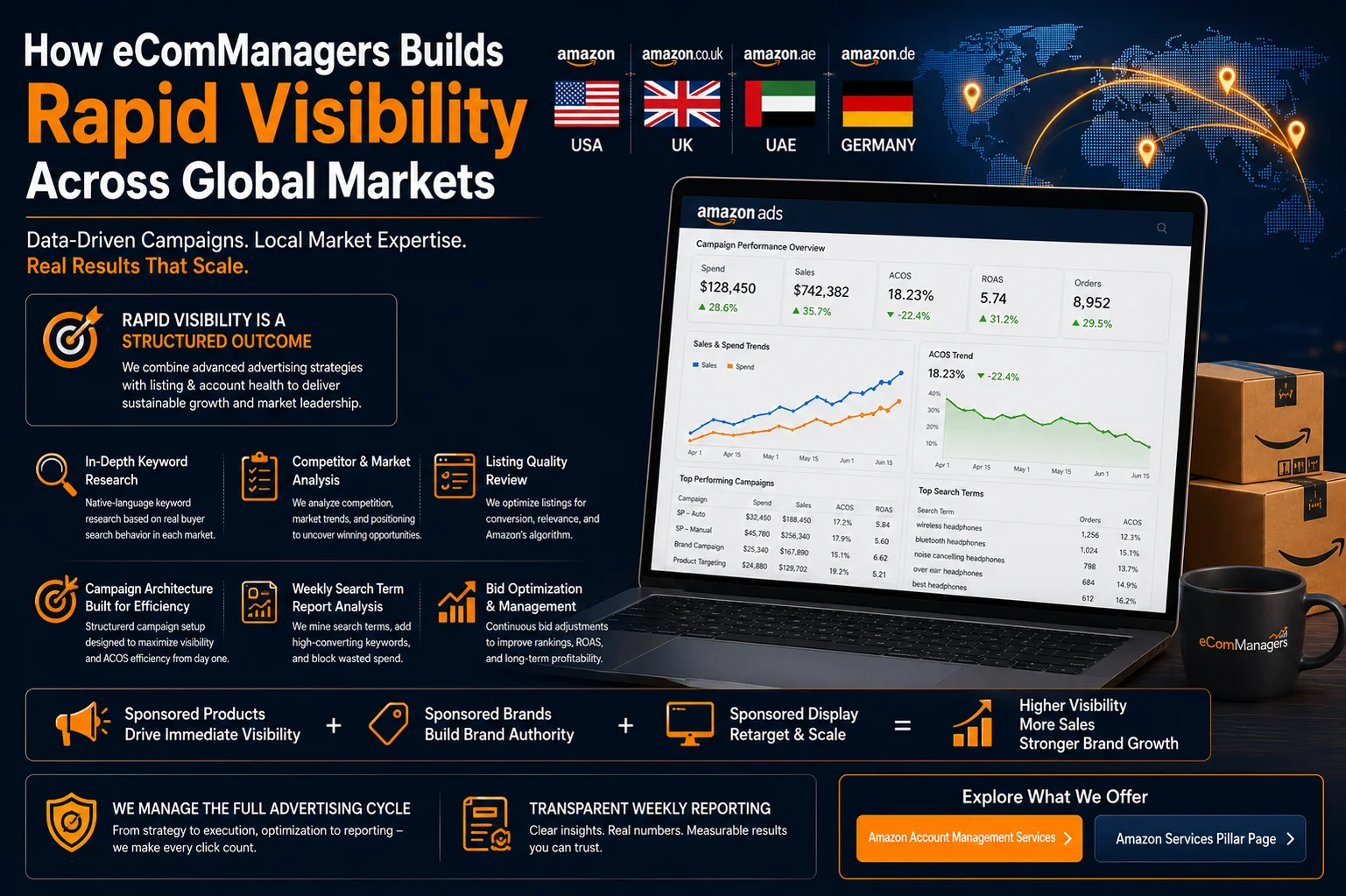
Multi-Marketplace Visibility Across USA, UK, UAE, and Germany
Rapid visibility across multiple Amazon marketplaces is not a matter of copying campaigns from one region and pasting them into another. Each marketplace has its own competitive density, cost-per-click benchmarks, seasonal patterns, and buyer search behavior that require locally calibrated strategies.
In the USA, you’re operating in the highest-competition, highest-reward Amazon marketplace globally. CPCs reflect the competitive intensity, which means efficiency in campaign structure and keyword selection matters more here than anywhere.
In the UK, vocabulary differences from American English affect keyword targeting in ways that aren’t immediately obvious. “Trainers” versus “sneakers,” “autumn” versus “fall,” “nappies” versus “diapers” are small differences that produce significant campaign efficiency gaps when campaigns aren’t localized.
In Germany, advertising in English produces significantly weaker results than native German campaigns. Keyword research needs to be conducted in German by someone who understands how German consumers actually search, not through a translation tool.
In the UAE, the bilingual search environment with meaningful volumes in both English and Arabic requires a dual-language keyword strategy and careful negative keyword management to prevent budget leaking into irrelevant traffic from either language track.
Managing visibility across all four markets simultaneously requires a partner with genuine multi-marketplace expertise, not a single-market agency operating outside its core competency. Our Amazon PPC Case Studies show what this kind of localized approach produces in real accounts.